Springtime brings new life, warmer weather, and plenty of fresh inspiration in the preschool classroom. It’s the perfect time to refresh the classroom with springtime dramatic play areas. These fresh new ideas come with hands-on, seasonal themes that encourage creativity and imagination.

Whether students are buzzing like bees, setting up a lemonade stand, or planting pretend gardens, springtime dramatic play gives children opportunities to explore, collaborate, and build real-world connections through play.
Benefits of Springtime Dramatic Play
Dramatic play in preschool is more than just pretending. It gives children a chance to explore real-world ideas in a way that feels safe, engaging, and meaningful. When the play centers are tied to seasonal themes like spring, the learning becomes even more relevant and exciting. Children build essential skills across multiple areas of development while imagining, interacting, and role-playing with their peers.

Springtime dramatic play supports:
- Fine and gross motor skills by using tools, dressing up, utilizing props, and acting out real-life tasks
- Early literacy as children write signs, read menus, or tell stories while playing
- Math concepts through sorting, counting, measuring, and using money in pretend settings
- Social-emotional development by encouraging cooperation, empathy, and turn-taking
- Language growth through rich vocabulary related to springtime, such as bloom, hatch, and sprinkle
- Problem-solving and critical thinking as children navigate roles and create their own play scenarios
These centers give children the opportunity to connect what they see outside, such as flowers blooming, baby animals, and changing weather, to their indoor play in a way that supports meaningful, hands-on learning.
All of these Springtime Dramatic Play printables and more – in one growing bundle!

Dramatic Play Pretend Play Printables Growing Bundle for Preschool & Pre-K
$122.50HUGE bundle or dramatic Play Centers for the Early Childhood Classroom! Each set includes all of the signs, labels, writing activities, role play name tags, and a social story to introduce the new dramatic play center. New sets will be added to the bundle as they are created, at no additional cost to you!
Springtime Dramatic Play Centers
Here are ten dramatic play centers that work beautifully during the spring months. Each one encourages preschoolers to explore seasonal ideas through imaginative and immersive play.
Flower Shop
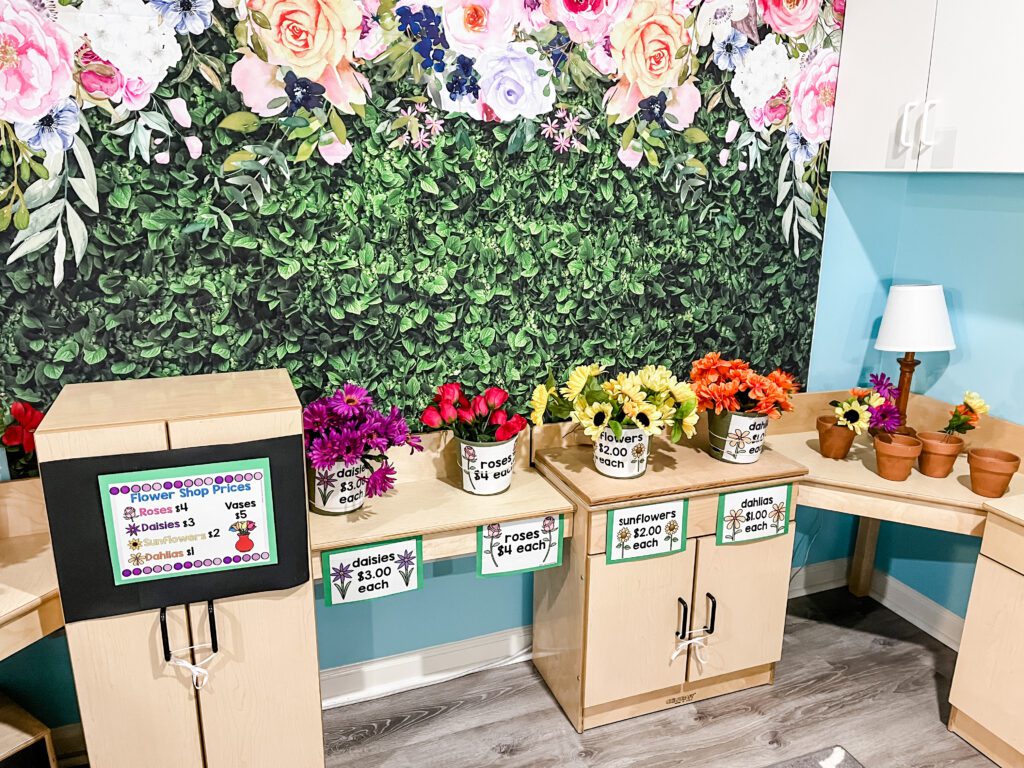
A preschool flower shop is a simple way to reflect the natural changes that come with spring. Children can create flower arrangements, match colors, and take pretend orders from customers. The center might include play flowers, vases, a cash register, and labeled signs. It encourages creativity and introduces vocabulary related to plants and seasonal growth.
Beekeeper
This springtime dramatic play center invites children to explore the role of a beekeeper during the busy spring season. Students can tend to pretend hives, collect honey, and package beeswax products. Props might include beekeeper hats, jars, honey dippers, and market signs. As they play, children build vocabulary and gain a basic understanding of pollination and the role bees play in nature.

Farmer’s Market
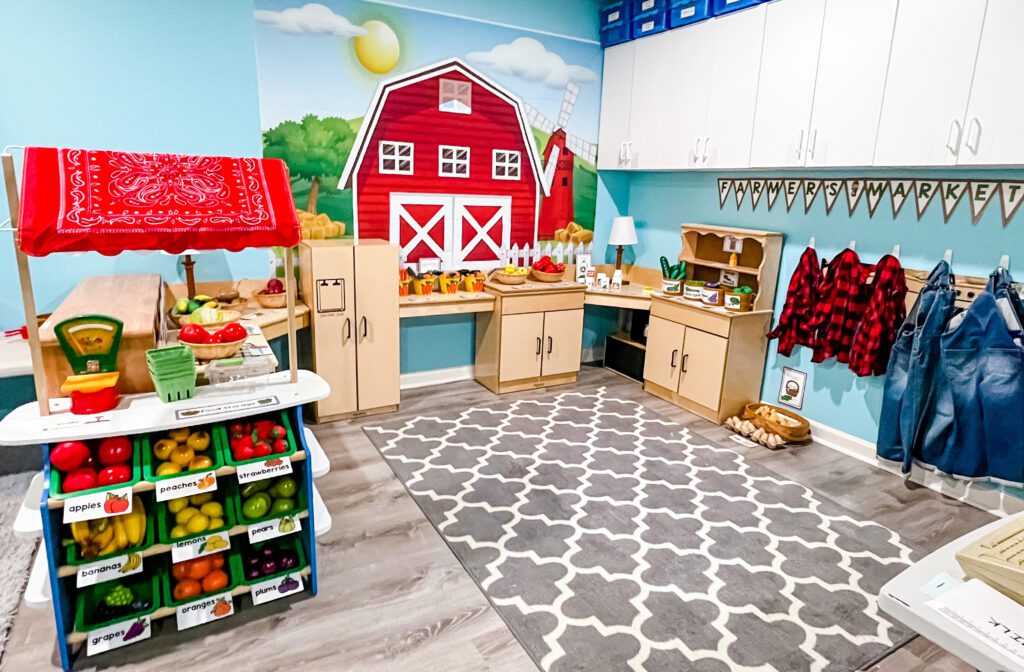
A farmers market dramatic play center offers opportunities for children to act out springtime community experiences. They can sort fruits and vegetables, set up a stand, and exchange money for goods. Include baskets, signs, pretend produce, and play money to complete the setup. This center supports early math skills while reflecting the seasonal availability of fresh food in the spring.
Camping
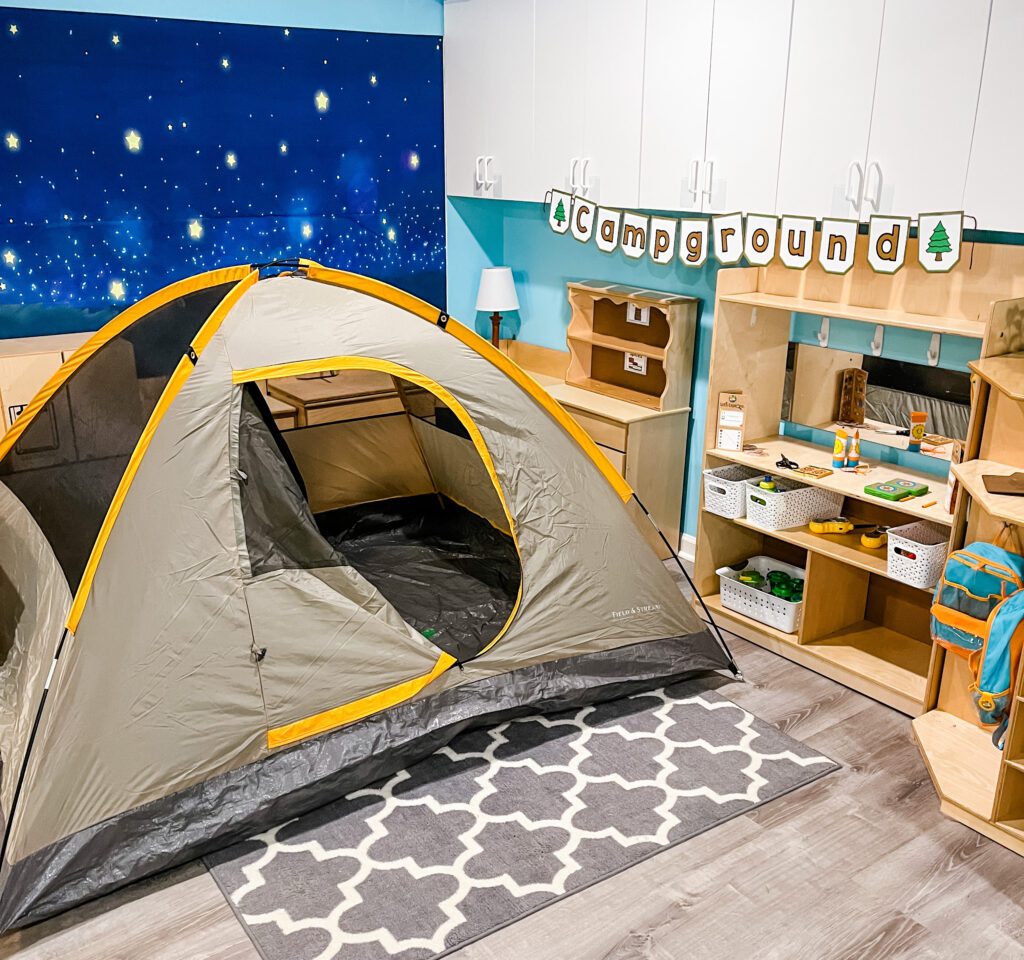
A camping dramatic play center gives children a chance to explore nature through pretend play. They can set up a tent, pack supplies, and gather around a make-believe campfire. Add a tent, starry background, sleeping bags, flashlights, and a small basket of books to extend the experience. Including labeled signs for the campsite, tent area, and supply bin helps children organize materials and supports early literacy skills.
Vet Clinic

Spring is a great time to add baby animals to the pretend vet clinic. Children can care for chicks, bunnies, or lambs using pretend medical tools and check-up charts. They might take temperatures, wrap bandages, or fill out exam forms. Labeled signs and patient sheets help guide the play, build vocabulary, and support early writing skills.
Lemonade Stand
A lemonade stand offers a fun way for children to explore early math and sequencing skills. They can mix pretend lemonade, pour drinks, and exchange money for orders. Props might include pitchers, cups, lemons, menus, and a small cash register. Adding labeled signs for pricing, ingredients, and supplies helps support vocabulary development and adds structure to the play.

Weather Station

Young children are naturally curious about the weather, especially during a season full of change. They can report daily conditions, use pretend microphones, and dress up in clothing to match the forecast. Props like weather charts, sunglasses, raincoats, and umbrellas help bring the experience to life. Labeled tools and forecast cards support early literacy and connect the play to the rainy days and sunshine that come with spring.
Donut Shop
A donut shop dramatic play center offers a fun way to explore pretend baking, counting, and customer service. Children can take orders, serve donuts, and sort them by color or topping. Add trays, tongs, paper bags, and a pretend cash register to extend the play. Bright spring colors and labels can give the center a seasonal feel while also supporting early math and literacy skills.

Post Office

Spring is a wonderful time to introduce letter writing and pretend mail delivery. Children can write cards, stamp envelopes, and sort mail into labeled bins. Include small mailboxes, shoulder bags, and pretend postage to complete the setup. Printable labels and signs help organize materials, support early literacy, and give structure to writing spring cards, invitations, and notes for classmates.
Tea Party
A tea party center gives children the chance to role-play a simple social gathering, often inspired by springtime events like garden parties or picnics. They can set the table, pour pretend tea, and serve snacks to their guests. Include props like teacups, plates, sun hats, and a small tablecloth to complete the setup. Labels and printable menus help build vocabulary, support early literacy, and add structure to the play

Tips for Setting Up Springtime Dramatic Play Centers
Thoughtful setup can make dramatic play more engaging and manageable for both children and teachers. These tips can help create a springtime space that’s inviting, organized, and packed with learning opportunities:
- Rotate themes to keep interest high and introduce a variety of spring experiences.
- Use real-life photos or signs to build vocabulary and help children connect play to the world around them.
- Combine open-ended props with themed printables to encourage creativity while supporting structured learning.
- Store props in clearly labeled bins so children can clean up independently and easily return to favorite centers.
- Invest in a few core materials (such as cash registers, clipboards, aprons) that can be reused across different themes.
- Add clipboards, paper, and pencils to encourage writing in meaningful ways.


Ready to Set Up a Springtime Dramatic Play Center?
Bring the season to life with printable signs, labels, order forms, and checklists designed for preschool dramatic play. These springtime centers are easy to set up, fun to play in, and filled with learning opportunities.