A light table brings a little magic to any preschool classroom. Even the simplest materials seem to glow, catching children’s attention and inviting them to explore. Light table activities can turn everyday objects into hands-on experiences that support math, literacy, science, and fine motor skills. Whether you have a full-size table or a small light panel, there are endless ways to make learning feel new and exciting.

What Makes the Light Table Special?
The flexibility of the light table is one of its best qualities. Math games, literacy centers, science investigations, and art projects all become more appealing with a little extra glow. Nearly anything that works on a regular table can be adapted for the light table. Acrylic blocks, colored lids, and clear cups are always popular choices.

For teachers looking for something different, printing templates on transparency sheets is a smart option. These clear sheets, once used with overhead projectors, are perfect for tracing, matching, or sorting games and can be reused again and again.
If a full-sized light table isn’t in the budget, there are other options. Small light panels are affordable and a great space-saving option. With a little creativity, the magic of the light table is possible in any classroom.

Light Table Activities to Try
There is no shortage of ways to use the light table in a preschool classroom. Whether you are hoping to entice curiosity, introduce a new concept, or keep children engaged during center time, the light table is up for the task. The best activities are the ones that invite children to explore, sort, build, and create.
With that in mind, here are ten light table activities that are both fun and meaningful in the preschool classroom.
#1 – Squish Bags with Colorful Water Beads

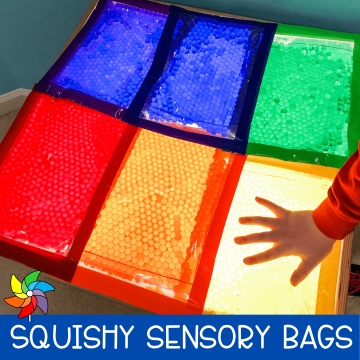
Fill zipper bags with clear hair gel and a handful of water beads. Seal tightly and tape the edges for safety. Children can squish, sort, and move the beads across the light table, watching as the colors glow and shift in the light.
Learning focus: Sensory exploration, color recognition, and fine motor skills
#2 – Build-a-Letter Fine Motor Dots

Set out translucent bingo chips, colored gems, or plastic buttons. Place simple letter outlines (printed on transparency paper or regular paper) on the light table. Invite children to fill the lines of each letter using the dots, building letter recognition and hand strength.
Learning focus: Letter formation, early literacy, fine motor practice
#3 – Create a Peg Design

Offer translucent pegs or stacking counters and pegboards. Children can design patterns, pictures, or simple shapes by placing pegs into the board. The light below makes the colors pop and encourages investigations in symmetry and design.
Learning focus: Visual discrimination, patterns, and fine motor coordination
#4 – Decorate a Fall Tree

Cut out bare tree outlines on brown paper. Add materials like acrylic leaves, flat marbles, or tissue paper squares in fall colors. Children decorate the tree by arranging the pieces on top.
Learning focus: Seasonal awareness, creativity, and categorization
#5 – Create Heart Art

Great for Valentine’s Day or shape review! Cut heart shapes in various sizes from colorful transparent plastic sheets. Children layer the hearts on the light table to create designs and watch how the colors change when overlapped.
Learning focus: Color mixing, symmetry, and artistic expression
#6 – Citrus Fruit Color Sorting

Set out a bowl of acrylic citrus shape, plus clear plastic containers labeled with the colors green, yellow, and orange. Children group pieces by color, sorting limes, lemons, and oranges. This activity is great with any translucent manipulatives.
Learning focus: Sorting, counting, and color recognition
#7 – Count the Spiders

Use small plastic spiders along with spider web number cards. Children place the correct number of spiders onto each card, practicing counting and number recognition.
Learning focus: One-to-one correspondence, counting, and number sense
#8 – Trace the Lines

Print wavy, zigzag, or straight lines onto regular copy paper. Children trace over the lines using translucent stackable counters or gems. This activity builds hand-eye coordination and early writing skills.
Learning focus: Pre-writing, visual tracking, and fine motor control
#9 – Design a Snowflake

Give children translucent pattern blocks and snowflake templates. They arrange the blocks to fill in the snowflake shapes or invent their own symmetrical designs.
Learning focus: Geometry, symmetry, and spatial awareness
#10 – Make a Vehicle

Provide printable vehicle templates and translucent pattern blocks. Preschool children use the blocks to fill in car, truck, or train outlines, or build their own creations from scratch.
Learning focus: Shape recognition, design, and problem-solving
Tips for Light Table Success
A little planning can go a long way in making the light table an inviting and well-used space in the classroom.
- Organize materials. Use tays, small bins, or shallow baskets to keep translucent items and manipulatives neat and easy to access. When everything has a place, cleanup is quick and children can find what they need on their own.
- Rotate materials and themes. Keep children interested by swapping out materials or tying activities to the season, a holiday, or your current circle time theme.
- Encourage open-ended play. Not every activity needs strict instructions. Sometimes the best learning happens when children are free to build, sort, or explore in their own way.
- Safety first. Always supervise light table activities, especially when using small parts that could be a choking hazard. Remind children of the classroom rules and offer larger pieces when younger students are present.

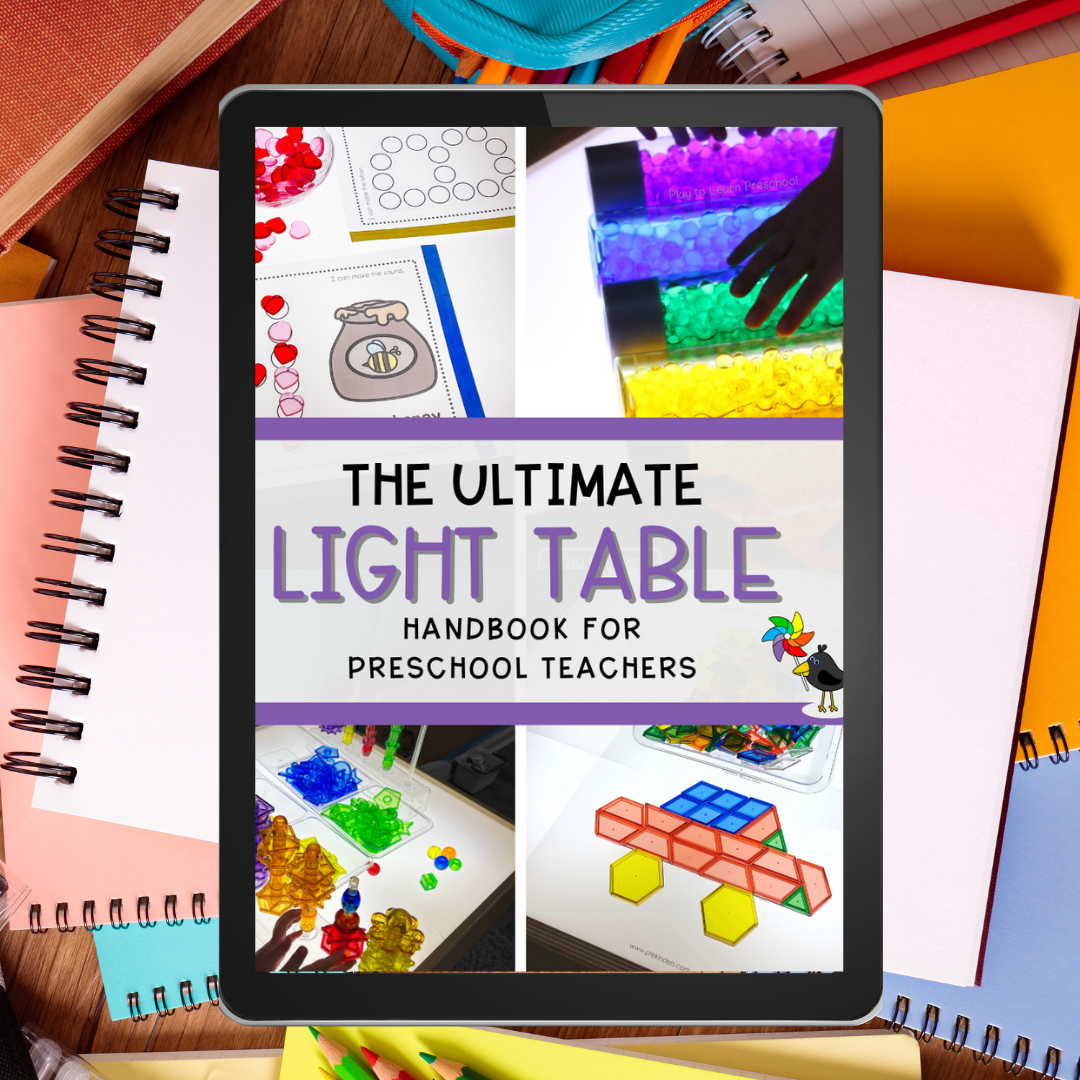
FREE Light Table Handbook!
Download your free Light Table Handbook!
After you subscribe, you will be redirected to the FREE Light Table Handbook. We respect your privacy. Unsubscribe at any time.
Frequently Asked Questions
Where can I get a light table or light panel?
Light tables are available through most educational supply companies such as Constructive Playthings, and smaller light panels can be found online or at big box retailers. For a budget-friendly option, make your own using a clear plastic storage bin and a string of LED lights.
What materials work best on the light table?
Translucent or transparent items are ideal. Try acrylic blocks, plastic counters, colored lids, flat marbles, magnetic tiles, or table scatter. Regular paper, thin plastic, and transparency sheets also work well for tracing and sorting activities.
Can I use printables or regular paper on the light table?
Absolutely! Most worksheets and templates work well, especially when printed on thin paper or transparency film. The light underneath makes lines and details pop, adding extra interest to familiar activities.
A Classroom Favorite
The light table is a classroom favorite for a reason. With a few simple materials and a little creativity, it’s easy to set up activities that inspire curiosity, build important skills, and bring a sense of wonder to early learning. Try one or two new light table activities this week and watch how quickly children are drawn in. Have a favorite activity that’s always a hit? Share it in the comments and help inspire other teachers.