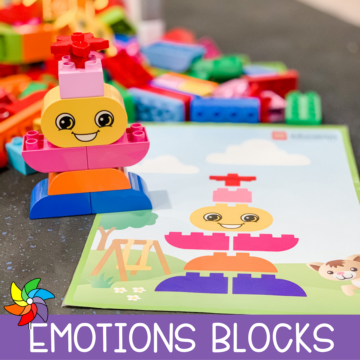
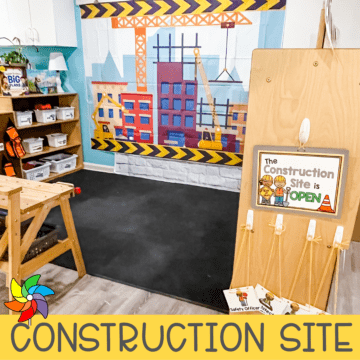
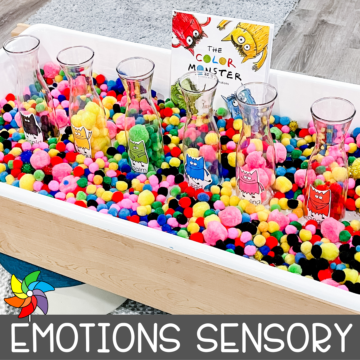
Preschoolers may not fully understand the emotions of others yet, but through dramatic play, they begin to walk in someone else’s shoes. Role-playing in the dramatic play center supports social-emotional learning by giving children a safe space to practice emotions, relationships, and empathy.

Expressing and Processing Emotions
Young children often experience strong emotions but may not yet have the words or strategies to explain how they feel. Dramatic play gives them a safe space to work through those big feelings by acting them out in familiar scenarios. When a child pretends to care for a sick patient or takes on the role of a parent, they are exploring emotions in a way that feels manageable and meaningful. These moments of pretend allow children to process what is happening in their own lives while also beginning to understand how others might feel in similar situations.
Common scenarios include:
- Pretending to visit the doctor
- Flying on an airplane
- Welcoming a new baby into the family
Through these roles, children practice:
- Processing emotions
- Developing empathy
- Practicing communication
- Gaining a sense of control

Building Cooperation and Social Skills

Dramatic play often brings small groups of children together to create a shared story. To make the play work, they need to cooperate, delegate roles, and agree on what will happen next. One child might be the doctor while another chooses to be the patient. A group pretending to run a grocery store might decide who will be the cashier, the shopper, and the bagger.
These moments give children a chance to practice listening, negotiating, and making group decisions. By working together to build a scene, they learn how to balance their own ideas with the needs of others, an important part of social-emotional learning.
A Sense of Control
In everyday life, preschoolers have very little control over the events around them. In dramatic play, they are the ones in charge. A child can choose to be a postal worker, a firefighter, or even the parent in a make-believe scene, and that choice gives them ownership of the story.


This sense of control can feel comforting, especially for children who may feel powerless in certain situations outside of school. It also allows them to explore personal preferences and abilities, such as what roles they enjoy or the types of tasks they feel confident performing.
Encouraging Empathy During Dramatic Play
Teachers can guide pretend play so children build even stronger social-emotional skills. A few simple strategies include:
- Ask open-ended questions – “How do you think the patient feels?” or “What would you do if your friend was sad?”
- Provide props that spark feelings talk – feelings charts, baby dolls, or storybooks about emotions naturally fit into the play area.
- Encourage teamwork – set up roles that require cooperation, such as a chef and server in a restaurant.
- Model empathetic behavior – point out and praise when children comfort a friend, share materials, or consider someone else’s needs.
Building Social Skills
Dramatic play is rarely a solo activity. Children negotiate roles, share props, and plan out storylines together. These interactions naturally build communication and problem-solving skills. A disagreement about who gets to be the teacher can become a lesson in turn-taking. Working together to set up a pretend restaurant helps children practice cooperation. Over time, these shared play experiences strengthen friendships and encourage positive social behaviors.

The Lasting Impact of Dramatic Play on Social-Emotional Learning
Dramatic play allows preschoolers to explore emotions and relationships in ways that feel meaningful to them. As they grow more comfortable with taking on different roles, they begin to carry those lessons into real interactions with friends and adults. The empathy, problem-solving, and confidence practiced in pretend play become the building blocks of social-emotional growth that will continue to support them throughout childhood.
Best Dramatic Play Themes for Teaching Empathy
Certain pretend play setups naturally encourage preschoolers to think about others and practice kindness. Here are a few favorites:
- Hospital or Vet Clinic – Encourages nurturing behaviors and caring for others.
- Baby Nursery – Helps children practice caregiving and responsibility.
- Grocery Store or Restaurant – Provides opportunities for patience, turn-taking, and customer service roles.
- Community Helpers (Firefighter, Police Officer, Teacher, Mail Carrier) – Builds appreciation for different roles in the community while promoting teamwork and problem-solving.


Want to Learn More about Social-Emotional Learning?
Looking for more information on how Dramatic Play helps with social-emotional learning? Try these links: