Play is how preschoolers learn best. Worksheets may look academic, but most are not age-appropriate for 3–5-year-olds. Play-based learning in preschool nurtures curiosity, creativity, and confidence as children explore the world around them.
The Problem with Worksheets in Preschool
Worksheets may seem like a convenient way to teach letters or numbers, but they ask preschoolers to do something they’re not yet ready for – sit still, hold a pencil correctly, and complete abstract tasks on paper. At this stage, children need movement, conversation, and sensory input to learn.
Worksheets often:
- Expect children to sit still and complete tasks beyond their developmental level
- Focus on the end product instead of the learning process
- Offer little opportunity for movement, creativity, or problem-solving
- Create frustration that discourages curiosity
- Fail to build social and motor skills essential for kindergarten readiness
Young children don’t need paper proof of learning. They need rich, hands-on experiences that help them make connections and understand their world.
How Play Supports Key Areas of Development
Cognitive Growth
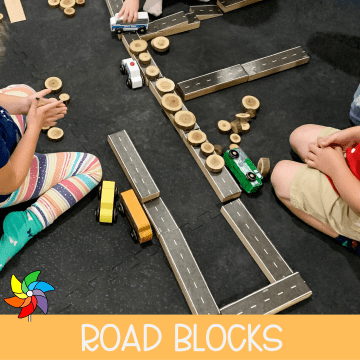
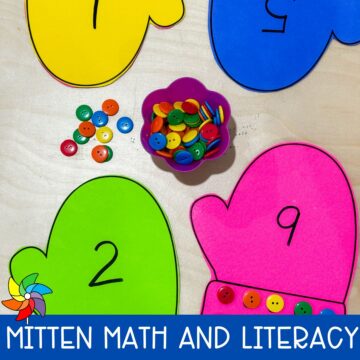
When children build with blocks, sort buttons, or create dramatic play scenarios, they are learning how to think critically and solve problems. Open-ended materials encourage experimentation, planning, and reasoning, all of which are key parts of cognitive development.


Language Development
Conversations during pretend play, storytelling, and circle time build vocabulary and expressive language skills. Retelling familiar stories using props, such as felt board activities, strengthens comprehension and sequencing skills that prepare children for reading.
Fine & Gross Motor Skills
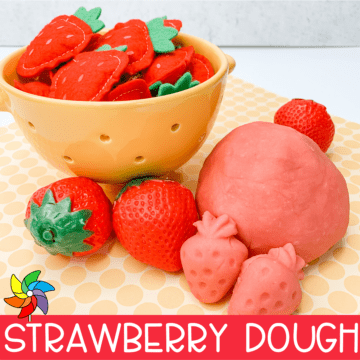
Play-based learning in preschool naturally supports motor development. Activities like play dough, lacing, cutting, and climbing build coordination, strength, and control. Hands-on tools such as play dough mats or tweezers for picking up small objects help prepare children for future writing tasks far more effectively than tracing worksheets.


Social-Emotional Skills
Sharing roles in dramatic play, learning to compromise, and caring for friends during play help children develop empathy, cooperation, and self-regulation. These are foundational life skills that can’t be practiced through paper tasks.
Research & Best Practice Support
Leading organizations like NAEYC and early childhood experts consistently recommend play-based learning as the foundation for preschool education. Research shows that children in play-focused programs demonstrate stronger long-term academic outcomes, creativity, and social skills compared to peers in programs focused on early seatwork.


While worksheets may seem to show “evidence” of learning, they often don’t align with what preschoolers truly need. Observation notes, photos of children engaged in play, and anecdotal records provide a much clearer picture of growth and development.
Practical Examples
Here are a few easy ways to replace worksheets with hands-on, meaningful play:
- Letter Recognition → Explore sensory trays filled with salt or sand, use magnetic letters, or match names with letter puzzles.
- Counting Practice → Use teddy bear counters, snack sorting, or block towers to represent numbers.
- Fine Motor Skills → Strengthen small muscles through playdough rolling, lacing beads, or cutting lines.
- Storytelling → Retell books with felt pieces, puppets, or story stones to build comprehension and sequencing.


Each of these examples supports the same academic goals as worksheets—only through methods that are active, engaging, and developmentally appropriate.
How Teachers Can Communicate This to Parents
Parents often equate paper work with real learning. Teachers can bridge this gap by explaining how play supports academic growth and showing visible examples of progress.
- Share short observations of children learning through play. (Digital platforms, like Brightwheel, make this process much simpler.)
- Display photos of learning centers with captions connecting play to goals in literacy, math, or science.
- Host a family night where adults can try a hands-on activity themselves, such as a sensory bin or building challenge.
- Send home information about the learning/play that is happening in class, and the educational benefits it has. Even sending something like these parent handouts helps families see the value in play-based learning.

When families understand the purpose behind play, they become strong partners in supporting it.
Teacher Tips for a Play-Based Classroom
Creating a play-based learning environment doesn’t mean giving up structure or goals. It means embedding them into everyday experiences.
Try these ideas to keep learning through play active and intentional:
- Rotate open-ended materials to keep interest high.
- Encourage children to make choices, solve problems, and work collaboratively.
- Integrate academic skills naturally into play areas.
(For example: add clipboards and alphabet charts to a dramatic play post office.) - Model curiosity and ask open-ended questions like “What do you think will happen if…?”
The Power of Play-Based Learning
Worksheets may give the appearance of academic work, but they rarely lead to lasting understanding. Play-based learning in preschool offers children what they need most—hands-on exploration, conversation, movement, and connection.
Real learning happens when children build, create, and interact through play. By choosing play over paper, teachers lay the foundation for curiosity, confidence, and lifelong learning.
What are your favorite ways to replace worksheets with play? Share your ideas in the comments!