The fine motor activities that preschool teachers use make a big difference in how children build control of their hands and fingers. Preschool fine motor skills develop through play and everyday exploration rather than worksheets.

These simple preschool activities are easy to prepare, use familiar materials, and give young learners plenty of practice in a way that is engaging and supportive.
Skills Supported Through Fine Motor Play
Developing fine motor skills sets the stage for holding pencils, using scissors, and tying shoes. As children strengthen these small muscles, they improve hand-eye coordination and gain confidence with daily routines. Tasks like buttoning coats or opening containers becomes easier when their hands have regular opportunities to move, squeeze, clip, and explore different materials.
Fine motor play helps children:
- Strengthen the small muscles in their hands and fingers
- Improve coordination between their eyes and hands
- Build the control needed for writing and cutting
- Develop their pincer grasp used for picking up small objects
- Practice using everyday tools like scissors, tweezers, and clothespins
Simple Fine Motor Activities
Hands-on activities help preschoolers strengthen their fingers and build confidence with tools. Simple materials like stickers, beads, and play dough make it easy to offer meaningful fine motor practice throughout the day. The ideas below fit well in centers, small groups, and independent work time.
Tweezers and Tongs
Tweezers and tongs give children a chance to practice controlled squeezing and careful hand movements. Set out pom-poms, mini erasers, or beads for children to sort or transfer between bowls. This simple setup strengthens the small muscles in their hands and supports steady coordination between their eyes and hands. Tweezers and tongs also fit easily into sensory bins for playful searching and collecting.

Beading and Lacing
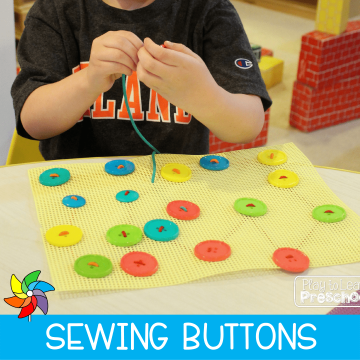
Threading beads, pasta, or buttons onto string or pipe cleaners strengthens the pincer grasp and encourages careful hand movements. To add a different twist, provide children with plastic lacing mats, large buttons, and laces. Students can use in quiet centers, during arrival time, or as part of center rotations.


Sticker Play

Stickers are an easy way to build finger strength as children peel, place, and press each one onto the page. This careful motion supports hand eye coordination and early pencil control. Stickers can be used to trace the first letter of a name, fill in simple shapes, or create small art projects. Sticker strips and small sheets fit well in centers and give children quick, satisfying fine motor practice.
Play Dough
Play dough is one of the most effective materials for building strong hands in preschool. Rolling, pinching, squeezing, and pressing the dough helps children strengthen every small muscle in their fingers and palms. Utilize a mobile sensory station stocked with rollers, plastic knives, scissors, cookie cutters, and themed stamps to encourage open ended exploration.


These tools invite children to cut long play dough snakes, press shapes into flattened dough, or create simple models that build both strength and imagination. A homemade play dough recipe is often a favorite choice because it stays soft and lasts through repeated use. Whether used during centers, morning arrival time, or small groups, play dough offers endless fine motor practice in a way that feels inviting and familiar.
Cutting and Ripping Practice
Cutting and ripping both strengthen the small muscles children use for writing and tool use. Offer strips of paper, card stock, or old magazines for scissor practice, starting with short straight lines before moving to simple curves. Ripping paper into small pieces builds finger strength and works well for confetti collages, letter decorating, and mosaic art. These activities encourage steady hand movements and help children gain confidence with early cutting skills.

Integrating Fine Motor Activities Into Centers
Fine motor practice is a great fit for preschool centers. Add tweezers or tongs to sensory bins for sorting and scooping. Place clip cards in the literacy center for letter or picture matching. Include play dough mats with shapes, letters, or numbers in the math center to support counting and early recognition.
Teacher Tips for Fine Motor Success
Rotate materials weekly to keep centers fresh and interesting. Trays help contain supplies and encourage independent cleanup. A balanced mix of structured tasks like lacing or clipping and open-ended options like stickers or play dough gives every child a way to participate.
Focusing on What Matters Most
Fine motor activities give preschoolers the practice they need in a way that feels inviting and developmentally appropriate. These simple ideas help strengthen small muscles while encouraging children to explore and learn through hands-on play.