Hands-on insect activities are a great way to support preschoolers’ natural interest in the tiny animals they see outside. Preschool children are quick to chase a butterfly or crouch down to study a trail of ants. Insects fascinate preschoolers and capture young children’s curiosity like nothing else. Their tiny size, colorful patterns, and constant movement make them perfect for early exploration.

That curiosity can easily grow into meaningful learning through hands-on insect activities for preschoolers. These experiences spark observation, problem solving, and scientific thinking, all through play.
Why Are Preschoolers So Fascinated by Insects?
From a preschooler’s perspective, bugs are just the right size to investigate up close. Whether crawling across the pavement or flying near the garden, insects invite attention and interaction.
- They are small and approachable. Unlike larger animals, insects can be less intimidating and easier to observe without special equipment.
- They are always moving. Children love to watch and follow insects as they crawl, fly, wiggle, and spin.

- They are full of colors and patterns. Butterflies, beetles, ladybugs, and bees provide a natural visual experience that captures attention.
- They offer real science in everyday spaces. Bugs are everywhere, making them perfect for nature-based learning. According to research, early experiences with nature, including insects, help develop observation skills, critical thinking, and an awareness of the natural world.
Hands-On Insect Activities to Make Connections
When children learn through play, they make connects that last. The following insect themed ideas encourage exploration, movement, and creativity in the classroom and beyond.
Bring the Insects In the Classroom for Hands-On Insect Activities
Watching live caterpillars transform into butterflies is one of the most memorable insect experiences for preschoolers. Students observe each stage of the life cycle, from crawling caterpillar to hanging chrysalis to full-fledged butterfly. This daily observation routine builds patience, encourages close attention to detail, and creates meaningful connections to nature. Releasing the butterflies at the end becomes a core memory for young children. Pair this investigation with a butterfly circle time unit or a life cycle science center for an entire learning experience.


Check out this Resource from my Shop!
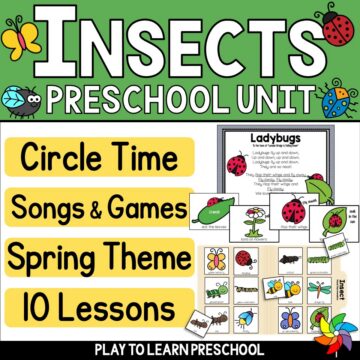
Insects Preschool Unit
$10.50This Insects Preschool Unit has everything you need to teach your young learners about insects including detailed daily lesson plans, activities, extension ideas, and centers. Everything is written out and planned to make your job easier!
- 10 circle time lessons
- 10 math, literacy, & fine motor centers
- Book Recommendations
Bug Investigation Lab
Let students become insect scientists for the day. Set up magnifying glasses, plastic insects, bug jars, and trays for observing. Invite children to draw what they see or describe insect features like legs, wings, and antennae.
Insect Sensory Bin

A sensory table filled with dyed, dry beans makes the perfect natural base for an insect-themed investigation. Add colorful plastic insects, matching colored buckets, magnifying glass, and tongs to invite exploration. Students dig through the beans to uncover insects, inspect their parts up close, and sort them by color into the correct buckets. This hands-on insect activity encourages observation, classification, color recognition, and fine motor development, all through play.
Host a Beekeeper Dramatic Play Center
Bring the buzz of the beehive into your classroom with a beekeeper dramatic play center. To begin, collect items like gloves, hats with netting, empty honey jars, and clipboards. Add labeled bins for things like “honeycomb,” “pollen,” or “bee tools” and invite students to care for the hive, collect honey, or inspect the bees. For a full set up guide, visit the Beekeeper Dramatic Play Center for printable props and ideas that make this theme easy to implement.


How to Encourage a Love of Insects in Preschoolers
Insects are a natural entry point for science in the early years. Encourage exploration by beginning with an insect circle time unit or create investigations of insects at the science center. These additional tips will help keep the interest growing in thoughtful and developmentally appropriate ways.

- Create a Bug Rich Environment – Display insect books, photos, and small world play options in your science or discovery area.
- Ask Open Ended Questions – Prompt curiosity with questions such as “Why do you think this bug has wings?” or “Where might this one live?
- Add Bugs to Pretend Play – Set up a butterfly garden, a bee-themed play dough center, or a insect sensory bin using simple proms and labels.
- Read Books About Bugs – Choose engaging picture books and nonfiction titles that introduce bug facts in a kid friendly way. Try these favorites about crickets & grasshoppers or butterflies.
- Model Respect for Nature – Teach children to observe gently, avoid harming insects, and release any living creatures after studying them.
Let the Curiosity Crawl In with Hands-On Insect Activities
Insects fascinate preschoolers and inspire wonder, movement, and questions that lead to learning. With simple materials and playful invitations to explore, teachers can tap into that natural interest to spark deeper thinking. Try one of these insect activities in your classroom this season and see how curiosity takes root. Whether indoors or outside, bug-themed play helps preschoolers connect with the world around them in meaningful ways.