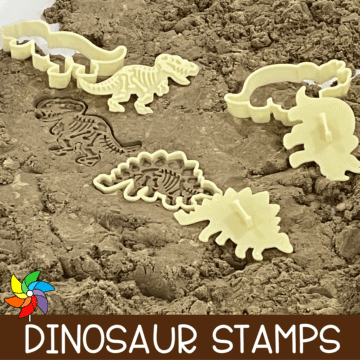
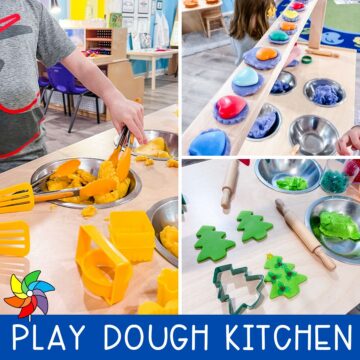
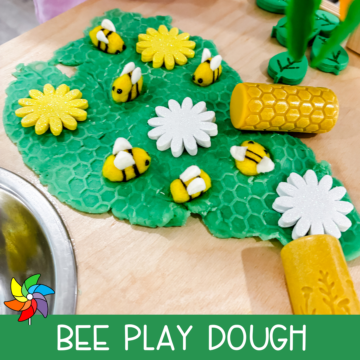
Early writing activities for preschoolers not only help our youngest learners understand the shape and structure of the letters in the alphabet, but they also serve a number of other functions as well. Early writing practice teaches directionality in writing, encourages fine muscle development and coordination, and also helps students process sensory information critical to the writing process. These early writing ideas for preschoolers are both fun and functional for teachers and students alike!

Early literacy skills are crucial in developing life-long learners. All of the domains of a child’s development – physical, social-emotional, cognitive, language, and literacy – are interrelated and interdependent. Children exposed to more literacy and language tools at a young age tend to achieve greater success in reading. Thankfully, young students are usually very enthusiastic about literacy activities – especially when they are presented naturally in play! You can read more about the impact of early literacy here.
Fine Motor and Early Writing Ideas
Learning to read and write goes hand in hand, like best friends helping each other out. When a child uses their fingers to do small tasks, it helps get their hand ready for writing letters and numbers. Some ways to do this include:
- Lacing cards
- Tracing activities
- Threading beads on pipe cleaners
- Manipulating play dough or clay
- Painting with a brush or other tools
- Pushing a large push pin into cardboard
- Building with LEGO bricks
- Manipulating unifix cubes
- Using tweezers or tongs at the sensory table
- Buttoning, zippering, or tying clothing in the dramatic play area
It is also important to help students understand that letters and words have meaning, or “concept of word.” Labeling items around the classroom or pointing to words in a book or poem while reading to the students helps students understand this. They’ll discover that letters can make words, and drawings can represent people, places, and things. These are important building blocks for becoming a good reader and writer!

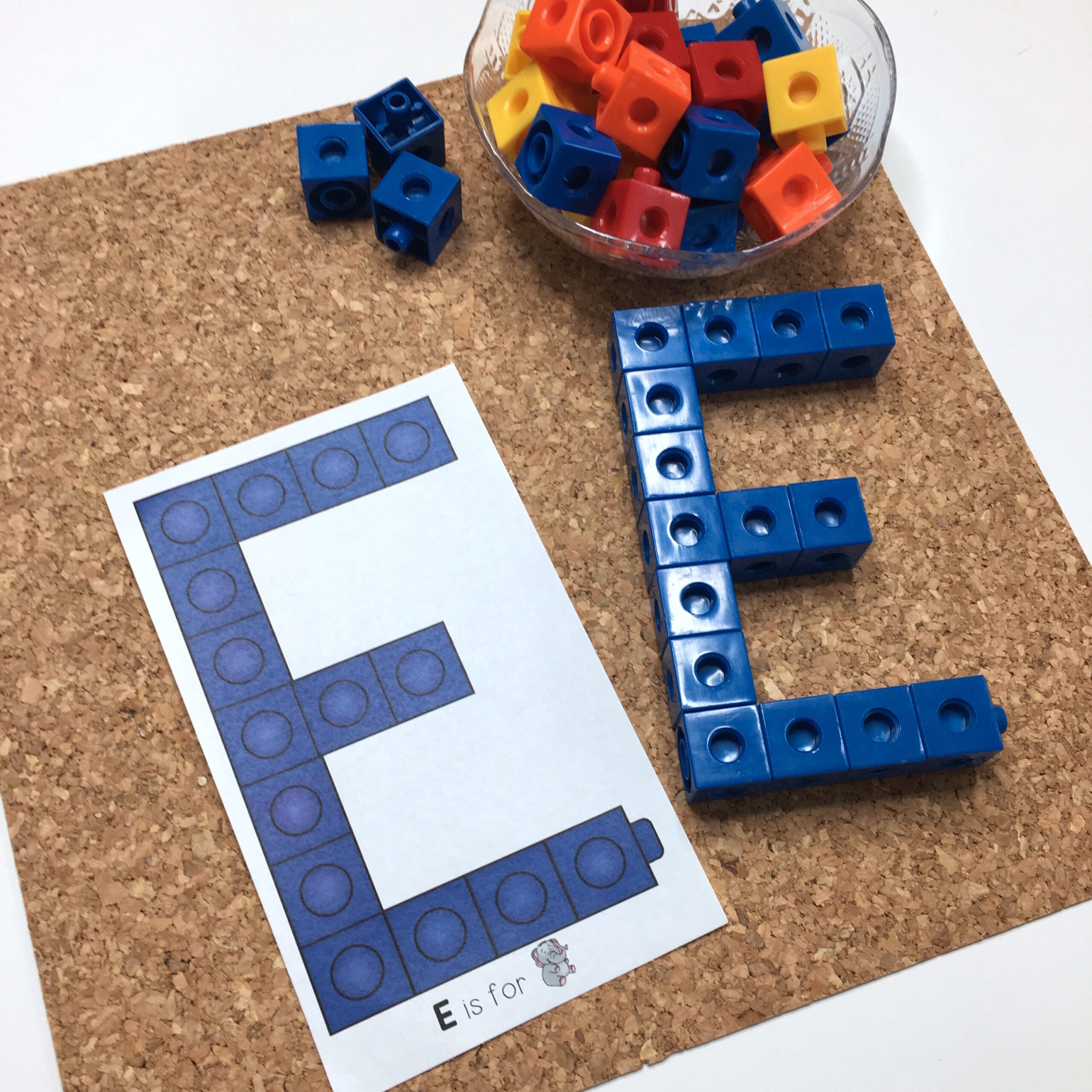
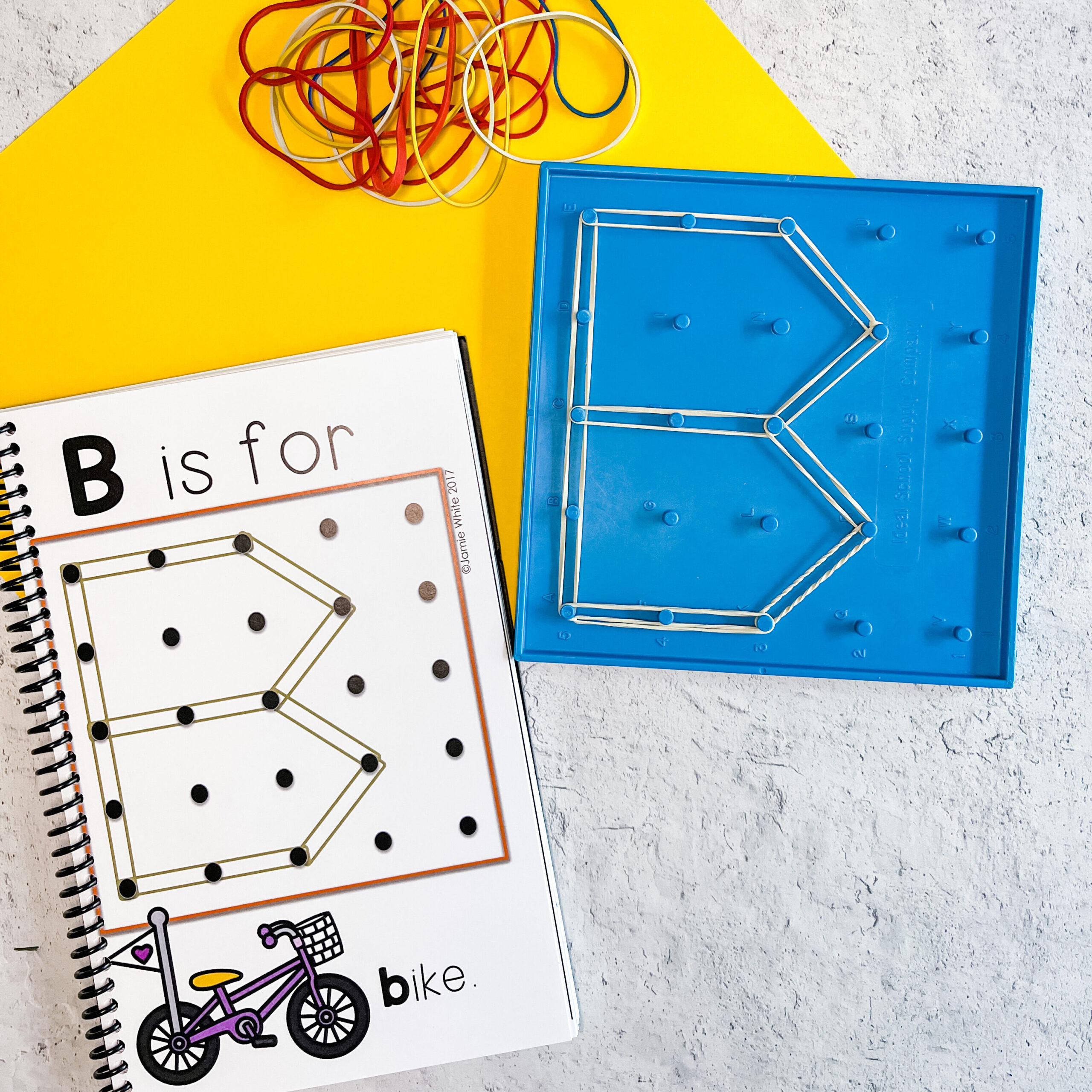
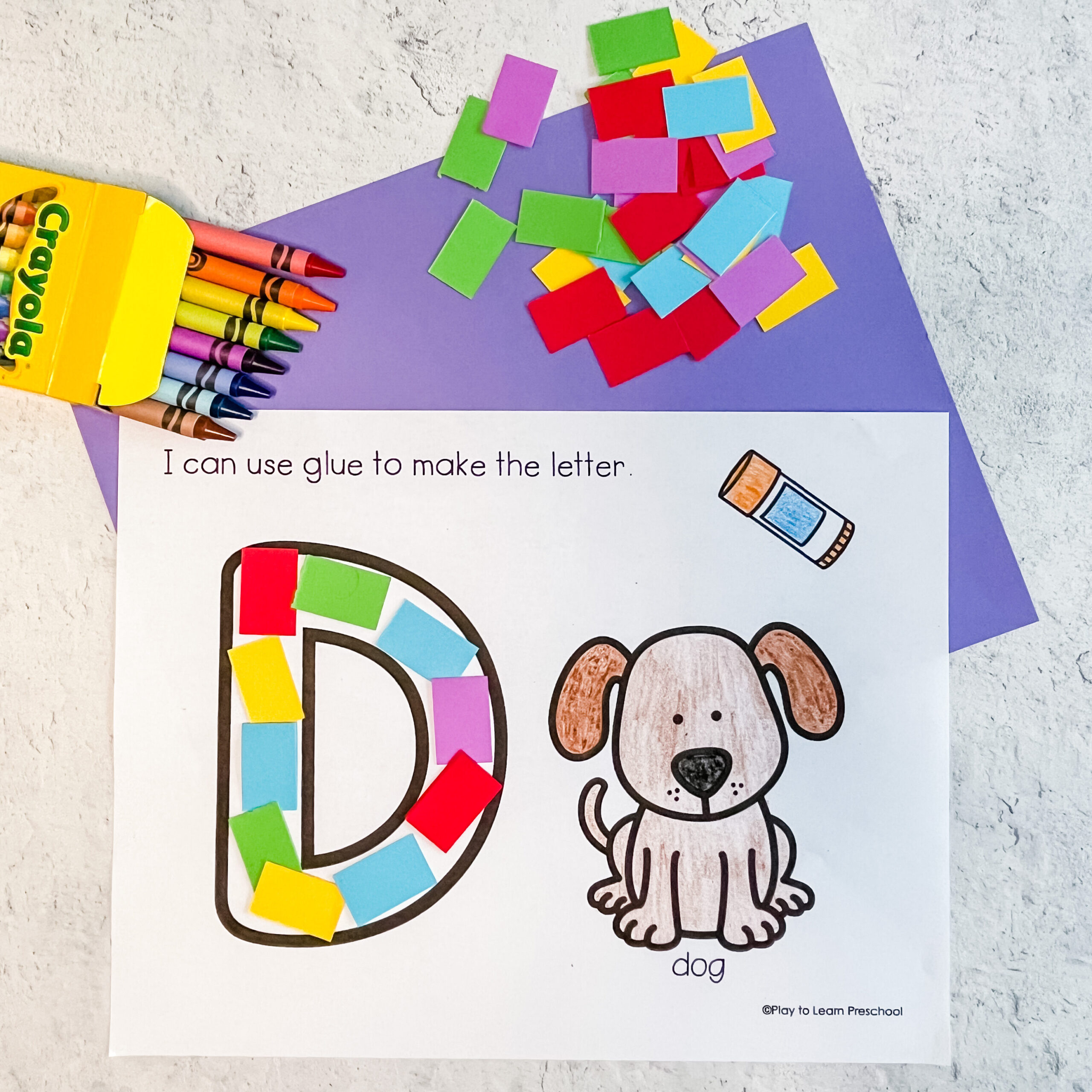
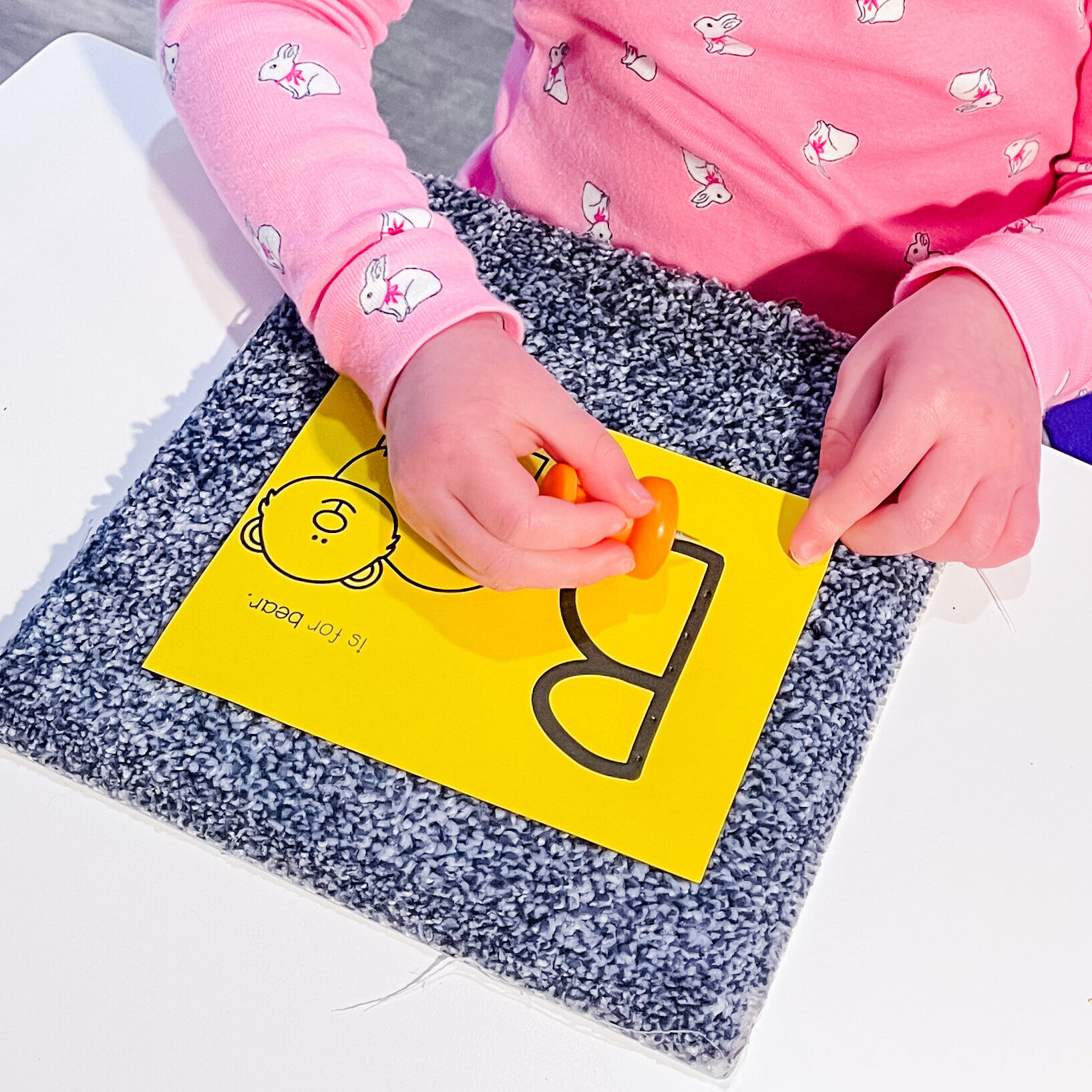
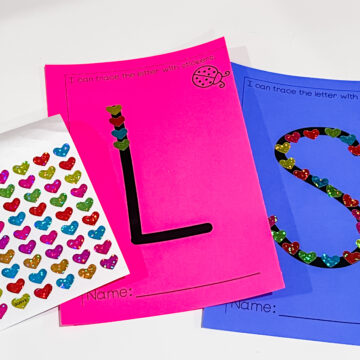
Here’s a list of ideas that incorporate both fine motor and alphabet skills – and this is just the beginning!
- Letter Dots
- Alphabet Snap Cubes
- Alphabet Geoboards
- Collage Letters
- Push Pin Cards
- Alphabet Sticker Pages
Check out this Resource from my Shop!
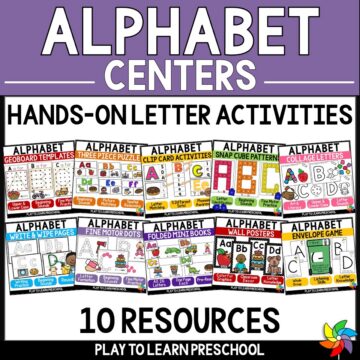
Alphabet Activities Hands-On Literacy Centers for Preschool and Pre-K
$23.50Teach your young learners the alphabet with this set of hands-on, fun, and practical letter centers. Includes 8 centers, plus a set of alphabet wall posters!
Tracing Activities
One way of honing the fine muscle skills needed for writing is tracing. Letter tracing helps students build muscle control and coordination from the wrists all the way to the tips of their fingers. With all fine motor activities in these early writing ideas, repetition is key. Whenever a child picks up a pencil, their brain sends signals to communicate with the hands. The more practice a child has holding a pencil and putting it to the paper, the more familiar those signals become until writing becomes second nature!
Even before a child can recognize letters, it is not too early to start practicing pre-writing skills. Straight, zig-zag, and curved lines are the building blocks of letters – so tracing different lines or doing simple mazes helps. Even before a child fully understands the letters and what they mean, tracing letters helps prepare children to become skilled writers.
Teaching preschoolers to trace, especially in the early years, allows them to find their dominant writing hand and become familiar with techniques like ‘crossing the midline,’ which will make it easier for them to eventually start writing letters on their own.


Building Skills through Early Writing Ideas
Tracing letters also helps students build spatial awareness. As preschoolers absorb the world around them, they develop a sense of space and place. At its simplest, sitting at a table with a pencil in hand helps build this physical sense of self. They learn intuitively to judge how far the paper is from their body, where their hand is on the paper, and more.
In addition to the physical, this sense of space brings with it a vocabulary that children are beginning to master. Positional words such as “above,” “down,” and “around” are new to preschoolers. Tracing the alphabet can be a great opportunity to continue practicing these concepts. Encourage students to talk about the letters that they are tracing. Arrows showing directional movement are great for starting discussions like “Which way do you need to move the pencil to make this letter?”
Practice pages are fantastic for building all of these skills. An economical way to use them is to put them in page protectors in binders and supply dry-erase markers. Students get double practice – once while writing and again while erasing!
- Alphabet Practice Pages
- Tracing Cards such as the ones included in the Sports Circle Time Unit
- Write & Wipe Alphabet pages
Additional Early Writing Ideas


- Editable Name Art Books
- Seasonal Letter Cards to use with a sand tray
Starting writing activities early with preschoolers isn’t just about learning letters. It’s about teaching them how to write in the right direction, helping their muscles get stronger, and making sense of what they feel as they write. These activities aren’t just useful—they’re fun too! So, by mixing fun with learning, teachers are giving preschoolers a strong start in reading and writing that they can carry with them for life.