The dramatic play center serves as a primary hub for social and emotional growth in the preschool classroom. It is also an ideal setting for developing functional literacy. Instead of practicing letters in isolation, children engage with text in ways that mirror the real world.

When a play area includes purposeful print, literacy becomes a natural part of the environment. A clipboard, a menu, or a simple sign-in sheet transforms a play scenario into a learning opportunity. This approach allows students to see that writing is not just a school assignment, but a valuable tool for communication. By using the dramatic play space, educators can support functional literacy at all levels in an enticing way that makes students feel very “grown-up.”
According to the experts at NAEYC, it is important that teachers take a very intentional and playful approach to incorporating literacy into the dramatic play area. There are three major levels to functional literacy in a dramatic play setting that should meet the needs of most students in a preschool setting.
Level 1: Environmental Print
Immersion in a print-rich environment is the first step toward literacy. Environmental print consists of the signs and symbols found in daily life. In a dramatic play area, these items demonstrate that text has a constant presence and a specific meaning. Especially for students that are not reading yet, these are essential to laying the groundwork for a foundation of literacy. It also adds to the “real feel” that adds that extra bit of enticement to the center.

- Action Signs: Signs such as “Wait Here,” “Order Here,” or “Stop” show how text directs movement. Flipping a sign from “Open” to “Closed” allows students agency and makes it feel more realistic to them.
- Picture-Word Labels: Labeling helps students connect objects to words. Not only does it help students learn how to put items away, it boosts the literacy in the area. Adding a clear photo next to the text supports children who are not yet reading. These should be simple, single word labels and, when possible, in languages that the children in the classroom speak or are learning to speak.
- Regulatory Print: Using “Employees Only” or “Exit” signs helps define the rules of the play space through words.
Level 2: Reading for Information


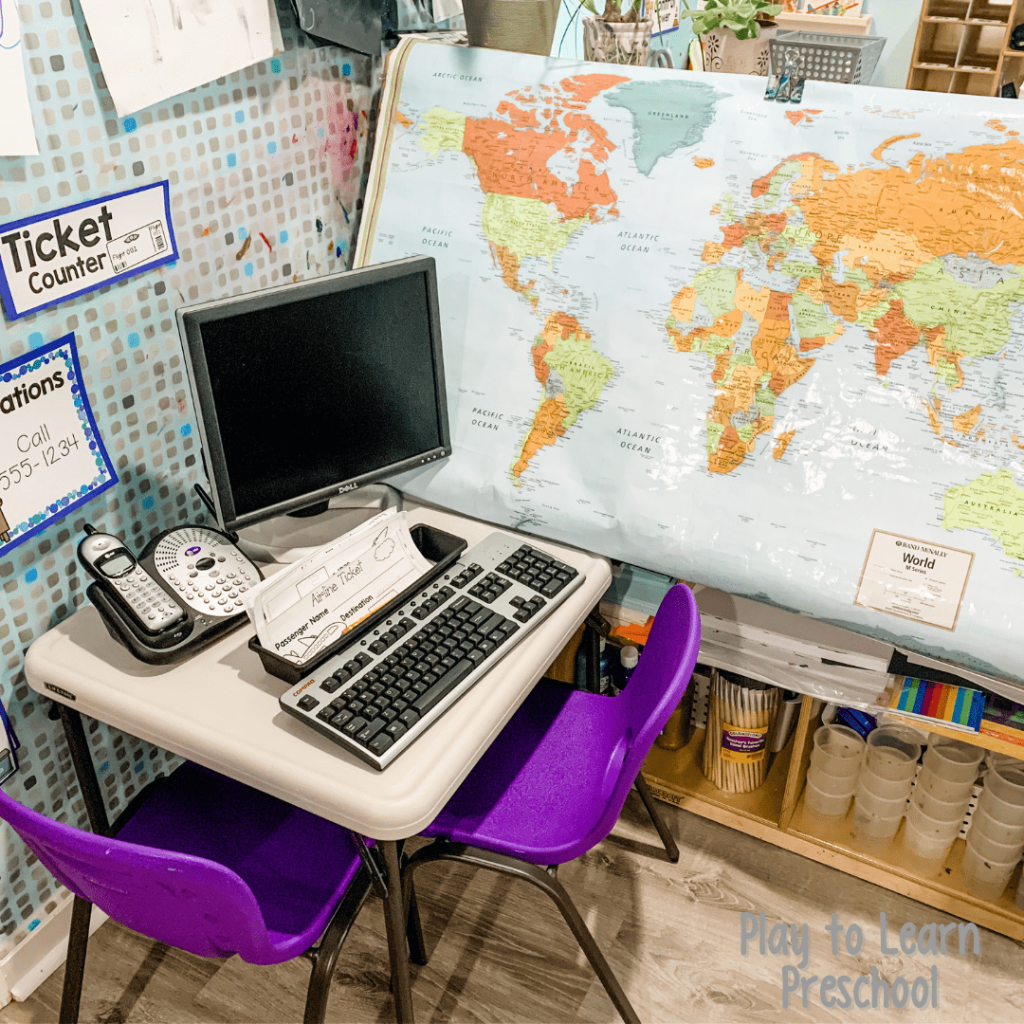
This level moves beyond looking at signs to using text to make decisions. At this stage, children begin to treat print as a tool for gathering information.

- Simple Menus: Menus with bold text and clear clip art allow children to browse options. This setup encourages “reading” a choice to a peer.
- Visual Manuals: A simple, three-step drawing showing how to “Wash a Pet” or “Mail a Letter” introduces the idea of following written directions.
- Reference Tools: Maps in an airport or a calendar in a doctor’s office provide data. Children use these tools to plan the next steps in a play scenario.
- Choosing a Role: Name tags help designate what roles children are choosing while they play. This builds both related vocabulary and literacy at the same time!
Level 3: Functional Writing for Functional Literacy
Functional literacy reaches it’s peak when there is a clear reason to use a writing tool. This level focuses on providing materials that make writing a necessary part of the fun.
- Checklists: Using a “Grocery List” or a “Safety Inspection” sheet is highly effective. Small boxes next to words or pictures encourage children to track progress with a checkmark or a scribble.
- Order Slips: Providing small pads of paper in a restaurant or post office invites children to record information. This practice shows that writing can communicate a person’s needs to others.


- Sign-In Sheets: A clipboard can be a valuable asset to the dramatic play center. Placing a clipboard in the waiting room of a “Doctors Office” or a passenger sign in at an “Airport” creates a reason to practice name writing. Waiting for a turn becomes a literacy activity when a name must be on the list.
Bringing Functional Literacy to Life in Dramatic Play
Adding functional literacy to dramatic play does not require a complete center overhaul. Small, intentional choices make the biggest difference. Start with simple environmental print. Add a few clear signs. Include a labeled clipboard. Offer a menu with pictures and bold text. Then, provide one meaningful reason to write, such as an order form or a sign-in sheet. Learning will happen through natural, engaging play.