This preschool color wheel art activity helps students learn all about colors and makes a fabulous display for the classroom. This art project takes six days (and some drying time) to complete. It’s perfect for a unit about rainbows, colors, color theory, artists, or even just for fun. Students will be so proud of their final product!

Materials Needed for the Preschool Color Wheel
- Large cardboard cake circles (the ones pictured are 14″)
- Large, thick white paper
- Red, yellow, and blue tempera or acrylic paints
- Paint brushes or foam rollers
- Small containers for paint mixing
- Pompoms, colored scraps of paper, and other collage materials that are only one color
- Liquid glue
Preparation

Before starting the project, trace a large circle onto white paper. If the paper is too small, trace a half circle on two pieces. To divide the circle into six equal parts, fold the circle in half, then fold it into thirds. Unfold the paper and cut along the fold lines. Each circle should have six wedges.

To prepare the students for the lesson, consider setting up a color station in the science area and the light table. Discuss the different ways that colors interact and why people see in color. Let the students explore mixing colors at the light table with colored water bottles or at the sensory table with play dough.
Free Colors Activity
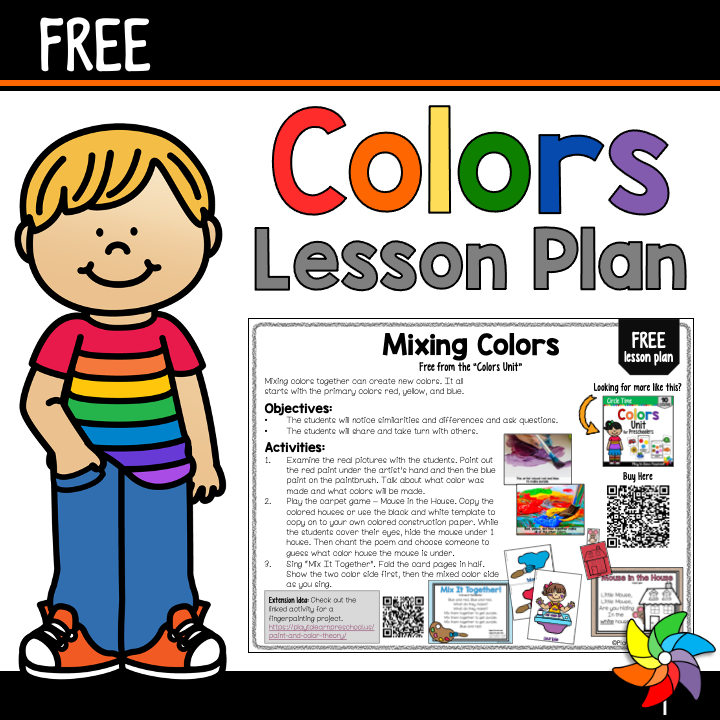
Unlock a FREE Preschool Colors Lesson Plan!
After you subscribe, you will be redirected to the FREE Colors Lesson Plan. We respect your privacy. Unsubscribe at any time.
Days 1 through 3 – Primary Colors


Start by introducing the primary colors one at a time. On the first day, set out one color of paint and a variety of brushes or rollers. Students paint the primary color onto the wedge. Set aside the wedges to dry. After the paint has dried, put the dried wedges on the table with an assortment of collage materials, such as pompoms and paper scraps, all of that primary color. Students glue the items as they wish to the painted wedge. Repeat this with the other two primary colors for the next two days.
Days 4 through 6 – Secondary Colors

For the next part of the project, students get to create the secondary colors! Introduce the concept of secondary colors with a book like Mouse Paint by Ellen Stoll Walsh or Little Blue and Little Yellow by Leo Lionni. Next, squirt two primary colors into a cup – red and yellow to make orange, yellow and blue to make green, and blue and red to make purple. Students mix the secondary colors as they did with the primary colors. Again, after the paint dries, students glue collage materials to the dried wedge of the same color.
Assembling the Preschool Color Wheel

When it comes time for assembly, the teacher should assist the students in placing the wedges on the cake circle. One way to do this is to trace the wedges so that each wedge has a defined space. Another option is to glue the pieces on as they are completed (with teacher assistance, if only to make sure all the wedges fit at the end!) Students should glue each piece in a rainbow order to create a full preschool color wheel. After the color wheel is put together, display it in the classroom for everyone to enjoy!

Enjoy the Preschool Color Wheel Art!
This color wheel art project is a fantastic way for preschoolers to explore and understand colors while creating something beautiful. Not only do students learn about primary and secondary colors, but they also get to express their creativity through painting and collage. The completed color wheel is a vibrant addition to any classroom and a wonderful reminder of each student’s hard work. Try this project in your classroom and watch your students’ faces light up with pride when they see their art on display. Happy creating!

Check out this Resource from my Shop!
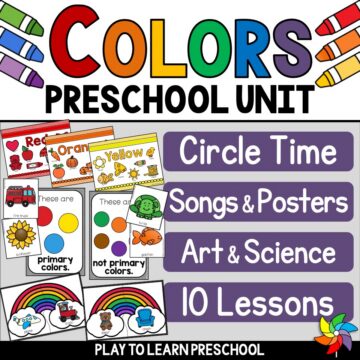
Colors Preschool Unit
$12.00Learn all about colors, shading, mixing, colors of the rainbow, and the Holi Festival of Colors, in this Colors Preschool Unit. Preschoolers and their teachers will love this complete 10 day Circle Time unit. It includes detailed daily lesson plans, printable activities, as well as literacy, math, and fine motor centers. It also includes 11 bonus color posters.