April showers might keep preschoolers indoors, but that doesn’t mean that they can’t enjoy “planting” flowers at a flower sensory table. Creating a flower sensory table is simple and provides hours of educational fun. This is the perfect indoor activity for the classroom with limited prep and materials. It’s also a great way to help children practice planting flowers before the class attempts it with real plants.

Materials Needed for a Flower Sensory Table
A flower sensory table doesn’t need to be elaborate or expensive to be engaging. Here are the materials for an amazing center:
- dry popcorn kernels as the sensory base
- alternate sensory bases found here
- silk flowers
- small clay pots
- plastic trowels
- plastic shovels
- kid gardening gloves
- plastic flower vases
What are students learning at a Flower Sensory Table?
Sensory play is perfect for integrating many different skills in one simple center! Students practice their large muscle control by scooping and pouring the material, raking it, and moving around the filled pots. The fine motor muscles also work when students arrange the flower stems into the pots and pick up small popcorn kernels with their fingers. Children practice social skills any time they are grouped at a center, as they have to negotiate the space and share the resources while they play. Preschoolers also often practice their language at the sensory table, using new vocabulary words when discussing what they are playing and developing imaginative games. Students even practice early math skills when they start sorting flowers by color or other characteristics – and identifying different styles of flowers is real science, too, even if the plants are artificial!

While a sensory table can look gorgeous on Pinterest or Instagram, often it isn’t as photo-worthy when the students are playing. This is absolutely normal and expected! Learning is messy sometimes; students should be more engaged in their play than worrying about a photo op. Cleaning up spills and getting the center ready for the next group is also beneficial to the students. It teaches them valuable life lessons, such as cleaning up when you are done and leaving places the way you found them.
Benefits of Sensory Play
Sensory play is an integral part of early childhood education. While it is engaging for children, it is extremely useful as well. Sensory play promotes relaxation and reduces anxiety in children. According to the Cleveland Clinic, sensory play even strengthens neural pathways in children’s brains, paving the way for more complex tasks down the road.
Follow Up with More Flower Fun!
The flower sensory table is a great standalone center. However, it’s also a perfect addition to a garden unit, Mother’s Day events, or a companion center to a Flower Shop Dramatic Play. No matter how it is used, it will plant seeds in children’s imaginations for years to come.
Check out this Resource from my Shop!
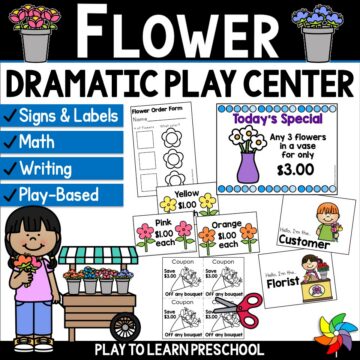
Flower Shop Dramatic Play
$4.99Young children will love arranging, selling, and buying flowers at their very own Flower Shop in the dramatic play center. This is a great center to use when teaching the Plants Unit.