Preschool nursery rhyme activities have always been a favorite for building early literacy skills. Adding a retelling tray makes them even more meaningful. These simple nursery rhyme retelling trays combine a printed rhyme, a matching book, and a few small props to bring the words to life. Children love using them during centers or quiet time to act out the rhyme again and again. It’s a playful way to build fluency, support sequencing, and encourage confident storytelling.

What are Retelling Trays?
Retelling trays are simply small bins, trays, or baskets filled with materials that help children retell familiar storys or rhymes. For a preschool nursery rhyme activity, each tray includes:
- A printed copy of the rhyme
- A picture book that connects to the theme or characters
- Small toys, figurines, or felt pieces that represent key parts of the rhyme
These trays are easy to set up and invite repeated use. Students return to them again and again to explore language in a hands-on way.
How to Use Retelling Trays
Retelling trays are designed to be open-ended, child-led, and developmentally appropriate. Once a tray is introduced, children can use it independently during centers, free choice play, or quiet time. Here’s how to make the most of them in a preschool setting:
- Introduce the tray during group time. Read the rhyme aloud and show the props as you say each line. Demonstrate how to use the items to act out the rhyme’s events and characters.
- Place the tray in a visible, accessible area. Low shelves, tabletop baskets, or a literacy center are great options. Keep it labeled so children can find it again and again.


- Encourage children to tell the nursery rhyme in their own way. Some may say the same rhyme out loud. Others may silently act it out. Both are valuable! Retelling builds sequencing, vocabulary, and fluency – whether it’s verbal or play-based.
- Rotate trays regularly. Switch them out based on your current theme, season, or student interest. Familiar rhymes with new props can encourage new engagement.
Simple Retelling Trays to Try
Each preschool nursery rhyme tray should include a printed copy of the rhyme, along with a related book and small props to help children act out the story. Choose rhymes with strong characters, clear actions, or repetition as these tend to capture emergent readers’ attention and invite them to revisit the activity again and again.

The Itsy Bitsy Spider
This familiar rhyme invites movement and repetition. It’s a great way for children to practice story flow as they act out what happens before, during, and after the rain.
Items to Include:
- A plastic spider
- A water spout made from PVC pipe
- Plastic raindrops
- Toy sun
- Pet the Cat and the Itsy Bitsy Spider
by James Dean
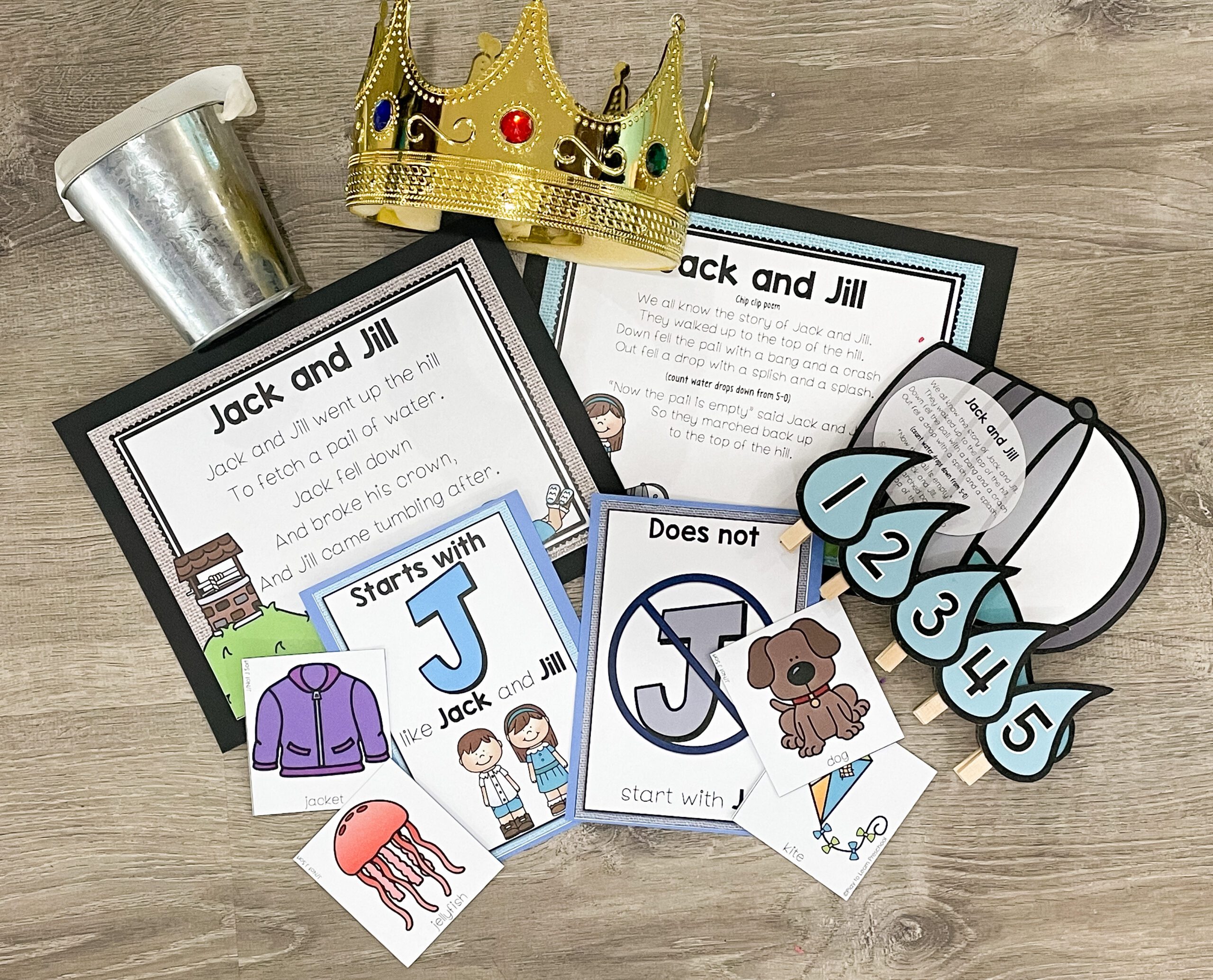
Jack and Jill
With two characters and a clear beginning, middle, and end, this rhyme offers a great way to explore cause and effect. Children enjoy retelling the tumble and giving Jack his crown back.
Items to Include:
- Two dolls to represent Jack and Jill
- Small plastic pail
- Toy crown or bandage for Jack
- Jack and Jill’s Treehouse
by Pamela Duncan Edwards


Hey Diddle Diddle
Silly characters and surprising action make this rhyme a great pick for imaginative retelling. Preschoolers love lining up the characters and acting out the jump over the moon.
Items to Include:
- Animal figurines (cow, cat and dog)
- Dish and spoon toys
- Moon figurine
- Cindy Moo
by Lori Mortensen
Twinkle, Twinkle, Little Star
This well-known childhood favorite is perfect for quiet moments and encourages movement and creativity.
Items to Include:
- A star attached to a craft stick
- Small flashlight
- Mini globe
- Twinkle, Twinkle, Little Star
by Jane Cabrera


Humpty Dumpty
This classic nursery rhyme offers a clear beginning and ending, perfect for helping children understand sequencing.
Items to Include:
- Plastic egg with googly-eyes
- A piece of wood to replicate the wall
- Horse and soldier figurines
- Humpty Dumpty Climbs Again
by Dave Horowitz
Baa Baa Black Sheep
Preschool students love taking on the role of the helpful sheep and delivering wool to different characters. It’s a simple way to explore giving, counting, and character dialogue during play.
Items to Include:
- Black sheep figurines
- Three bags of “wool” (cotton balls, pom-poms, or felt)
- Small people figurines
- Baa, Baa, Black Sheep
by Jane Cabrera


It’s Raining, It’s Pouring
Perfect with a weather unit or a cozy indoor day, this short rhyme sets the stage for exploring sound, mood, and action with simple props.
Items to Include:
- Small rain stick
- Miniature bed
- Figurine of an old man
- Weather props like raindrops
- When Isaac Hears the Rain
by Julie Thompson
There Was a Little Turtle
With playful language and silly situations, this nursery rhyme encourages children to act out each part with plenty of giggles.
Items to Include:
- Small box
- Felt mosquito, flea, and minnow
- A rock
- The Box Turtle
by Vanessa Roeder


Hickory Dickory Dock
This little mouse has a lot of energy – just like preschooler!. This provides a great opportunity to explore number recognition, rhyming words, and telling time during play.
Items to Include:
- Toy mouse
- Small toy clock
- Bell for the clock sound
- Pete the Cat: Hickory Dickory Dock
by James Dean
Jack Be Nimble
Short and full of action, this rhyme is ideal for active retelling. Preschoolers enjoy making Jack jump over the candlestick, or dress up and pretend to be Jack
Items to Include:
- Doll to represent Jack
- Battery powered candlestick
- Dress-up clothes for students
- Jack Be Nimble
by Jeffrey B Fuerst

Why Nursery Rhyme Retelling Trays Work
Preschool nursery rhyme retelling trays support a wide range of early learning goals:
- Oral language: Repeating rhymes out loud helps develop clear speech and expressive language
- Sequencing: Acting out a rhyme in order builds understanding of beginning, middle, and end
- Comprehension: Props give children concrete visuals to help them understand language
- Vocabulary: Exposure to rhyme-rich texts expands word knowledge in a natural way
Best of all, the materials are self-contained and easy for young children to manage independently.
Extension Ideas
Retelling trays are just one way to explore familiar rhymes with young children. Many classrooms also bring in movement games, sensory bins, bulletin board displays, and carefully chosen read-alouds to build on the same language skills. Try pairing trays with themed art or circle time activities from this collection of nursery rhyme ideas for the preschool classroom, or rotate in new books from a list of favorite nursery rhyme read-alouds. For a visual connection, use student work or printable sets to create interactive nursery rhyme bulletin boards that celebrate what children are learning.