Bees are fascinating to young children. Their bright colors, important role in nature, and busy movements capture curiosity right away. Learning about bees is a wonderful way to combine science, sensory exploration, math, literacy, and dramatic play all in one cohesive theme! Also, studying bees builds background knowledge, strengthens vocabulary, and encourages young learners to ask questions about the world around them. These hands-on bee activities are designed for preschool and PreK learners, inviting them to explore the busy world of bees while they play and learn together.

Bee Activities for Preschool
From sensory play to dramatic play, there are so many ways to bring a bee theme to life in the classroom. These hands-on bee activities give children a chance to explore, create, count, and imagine as they learn about the world of bees.
Bee Dance Felt Board

The felt board is a powerful storytelling tool during a bee unit. It works especially well alongside the nonfiction book Bee Dance by Rick Chrustowski, which explains how honeybees communicate through movement. (We love our monthly subscription with Rally Felt Co. for these cute pieces!)
During circle time, felt pieces are used to illustrate the story as it’s read aloud. The visual support helps children understand bee behavior, sequencing, and key vocabulary.
Later in the week, the felt board becomes a favorite storytelling center. Children return to the book and pieces again and again, retelling the story in their own words.
As they play, they:
- Practice using “book language” and repeated phrases from the text
- Strengthen vocabulary, rhyme, and narrative skills
Some children even act out the waggle dance themselves. This gives them a chance to move their bodies while deepening their understanding of how bees communicate and work together to survive.
Bee Songs & Movement Ideas for Circle Time
Circle time is a great way to introduce bee-themed vocabulary, movement, and science concepts in a playful, engaging way. This Bee Activities mini-unit includes five complete circle time lessons that use real-life photos, interactive songs, and simple games to help children learn all about bees.
These lessons are simple to prep but packed with learning. They build background knowledge, develop early literacy and math skills, and give children a chance to move, sing, and share their thinking with peers.
In addition to the circle time lessons, incorporate extra literacy and math centers with a bee theme. Bee-themed prewriting paths, cutting practice, bee counting, a concentration game, and patterning cards all extend the learning. These activities are designed to build on what children are learning during group time and support skill development through playful exploration.

Bee Sensory Bin Ideas for Preschool
Setting up a sensory bin is a simple way to create hands-on learning opportunities during a bee unit. Set up a vibrant sensory table filled with:
- Green dyed rice (grass)
- Tiny yellow pom-poms (pollen)
- Wooden beehive pieces (available here)
- Plastic sunflowers

Children love scooping, pouring, and pretending to pollinate the flowers. As they play, they strengthen important fine motor skills by using small muscles in their hands and fingers. Sensory play also encourages creativity, language development, and pretend storytelling.
In addition, sensory bins offer an open-ended way for children to explore science concepts like pollination and the role bees play in helping plants grow. Providing loose parts like flowers and hive pieces invites children to build their own understanding through hands-on experimentation and imaginative thinking.
Beekeeper Dramatic Play Center
Turn the dramatic play area into a buzzing bee yard and honey market. Children can dress up as beekeepers, check on the hives, collect pretend honey, and sell it to friends at the stand. This setup invites creativity and real-world role play.
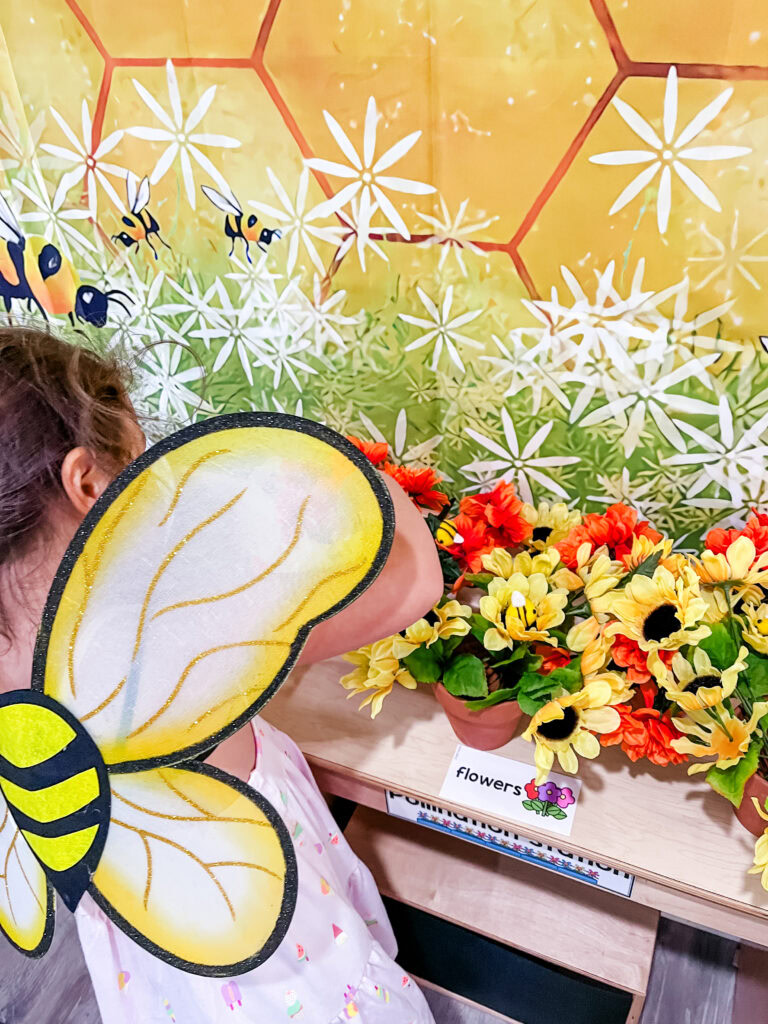

As they pretend, children take on different jobs. They work together, share ideas, and build language through conversation. Including props like flowers, jars, signs, and hive pieces helps bring the center to life.
Dramatic play also supports social and emotional growth. It gives children a playful way to build knowledge, practice cooperation, and explore how people care for bees.
Check out this Resource from my Shop!
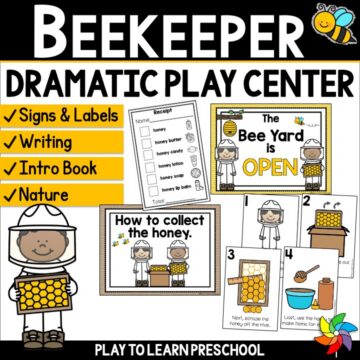
Beekeeper Dramatic Play
$4.99This sweet-as-honey Bee Yard Dramatic Play will keep Preschoolers and Pre-K students as busy as bees! Preschoolers pretend to be beekeepers by tending bee hives, collecting honey and beeswax, and even selling the products at a market stand.
Best Bee Books for Preschoolers
Books are a great way to build background knowledge and spark curiosity during a bee theme. Reading stories about bees helps children connect what they see in books to what they experience in hands-on activities. It also supports early literacy skills like vocabulary development, comprehension, and storytelling.
These three titles are perfect for preschool and Pre-K learners:

The Very Greedy Bee
by Steve Smallman
This funny story follows a selfish bee who learns the value of teamwork and sharing. A great read-aloud with an important lesson.

Give Bees a Chance
by Bethany Barton
With humor and kid-friendly facts, this book explains why bees are important and why we should protect them. It’s both silly and smart.

Bees are Our Friends
by Toni D’Alia
A gentle introduction to bees and their role in nature. The simple language and sweet illustrations make it perfect for young learners.
Preschool Math Activity: Counting Bees

This simple math center is a hands-on way for children to practice counting, one to one correspondence, and number recognition. To set it up, use beehive-shaped ice cube trays, small bee figures, and dice.
Children roll the dice, then count out the matching number of bees and place them into the hive spaces. Some children may count one bee per section, while others may fill each tray with different amounts. Either way, they are strengthening early math skills through hands-on exploration.
In addition to counting, this activity encourages problem solving and number sense. Children begin to notice patterns in how the numbers appear on the dice. Many will even start to subitize as they recognize quantities without counting each bee individually.
You can also modify the activity for different learners by using numeral cards instead of dice, encouraging simple addition, or prompting children to predict how many bees will fit in the whole hive.
Check out this Resource from my Shop!

Spring Bee Counting Games Preschool Math Activities Number Recognition
$3.25Make counting fun with these hands-on Bee Counting Activities! Perfect for preschool and kindergarten, this interactive set helps young learners develop counting, number recognition, and early math skills in a playful way.
Bee-Themed Art Projects for Preschool
Bee art projects give children a chance to explore color, texture, and creativity while learning more about how bees live and work. These activities are also a great way to support fine motor development, visual planning, and self-expression.
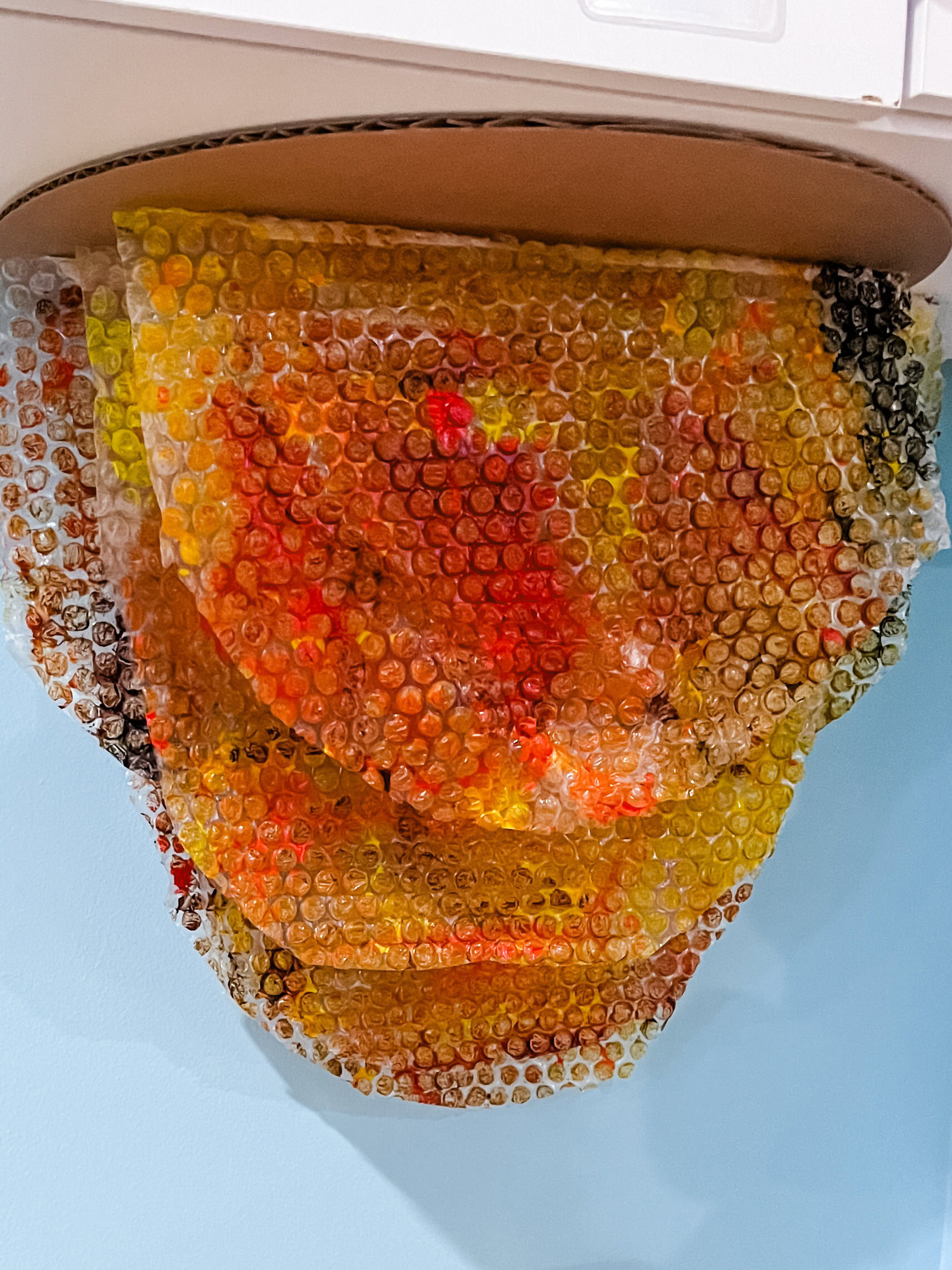
- Honeycomb Printing: Children stamp bubble wrap coated in paint to make honeycomb textures.
- Egg Carton Bees: After painting egg carton sections like bees, children add wings, stripes, and antennae to create a buzzing hive display.


Bee Activities for the Light Table
The light table offers a bright, inviting space for hands-on exploration. For this bee-themed setup, fill a shallow tray with yellow sand and sprinkle in black beans to represent pollen. Add loose parts such as wooden hive pieces, honey stirrers, and small resin bees.

Children use these materials to create hives, paths, and flower fields. Some sort and group the pieces. Others use them to tell stories or act out how bees collect pollen.
This center encourages close observation and thoughtful placement. As children move and arrange the small pieces, they build fine motor control and spatial awareness. It also supports language development as they describe what they are doing and share their ideas with others.
Honey Tasting Activity for Preschool Science
Important: Always check for allergies before offering honey. This activity should be optional and supervised closely.

Tasting honey helps children make real-life connections to what they’ve been learning. It’s a delicious way to bring science to life through the senses.
If possible, bring in a small piece of real honeycomb for students to observe. Let them look closely. They may notice the hexagon shapes, the wax texture, or the golden color inside each cell.
Offer a tiny sample of honey on a spoon or cracker. Talk together about how bees gather nectar, how beekeepers collect honey, and how it gets from the hive to the table.
Even if some children don’t want to taste it, they can still participate. They can observe, describe what they see, and share what they know about bees and honey.
Bee Counting and Play Dough Center Ideas
The play dough kitchen is the perfect place to bring math, sensory play, and creativity together. For this bee-themed center, offer yellow and black play dough, bee counting mats, and small bee figures.
Children can roll out play dough to form bees, build hives, or press shapes onto counting mats. They may match bees to the correct number on each mat, line them up in rows, or sort them by color. Some children will focus on counting and number recognition, while others will simply enjoy the sensory experience of shaping and squishing the dough.


This center supports fine motor development, one to one correspondence, and number sense. It also gives children the chance to practice problem solving and persistence as they create and count.
To extend the activity, add simple number cards or dice for guided counting games. You can also encourage children to create their own bee stories using the play dough and figures, blending early math with storytelling and pretend play.
What Children Learn from the Bee Activities
A bee theme offers more than just fun. It gives preschoolers the chance to explore science, math, and language through hands-on, meaningful play. Children learn how bees live, how they help plants grow, and how people work with them. Along the way, they build vocabulary, practice counting, and strengthen important thinking skills. They also work together, share ideas, and tell stories. Most of all, they learn to be curious and to care about the world around them.
Check out this Resource from my Shop!
Insects Preschool Unit
$10.50This Insects Preschool Unit has everything you need to teach your young learners about insects including detailed daily lesson plans, activities, extension ideas, and centers. Everything is written out and planned to make your job easier!
- 10 circle time lessons
- 10 math, literacy, & fine motor centers
- Book Recommendations