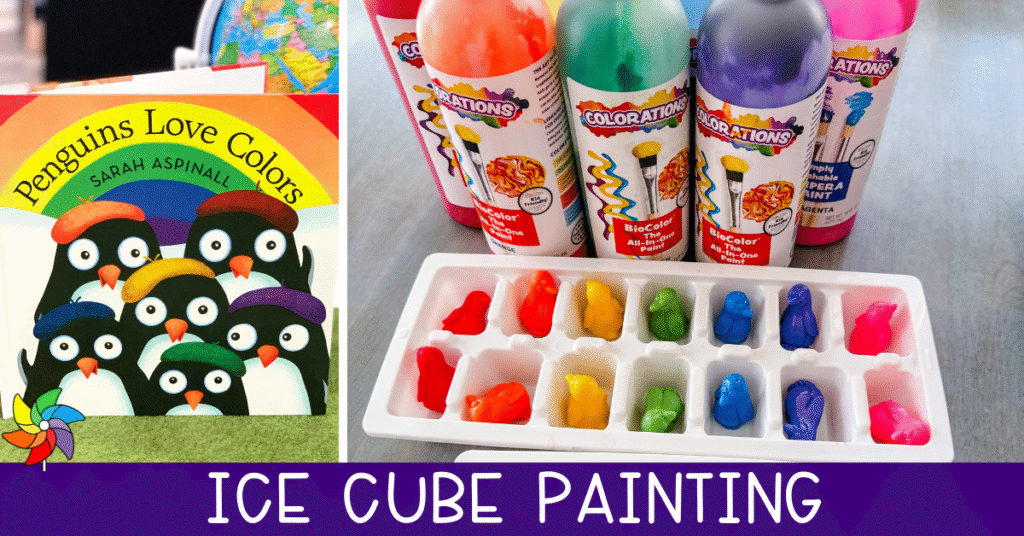
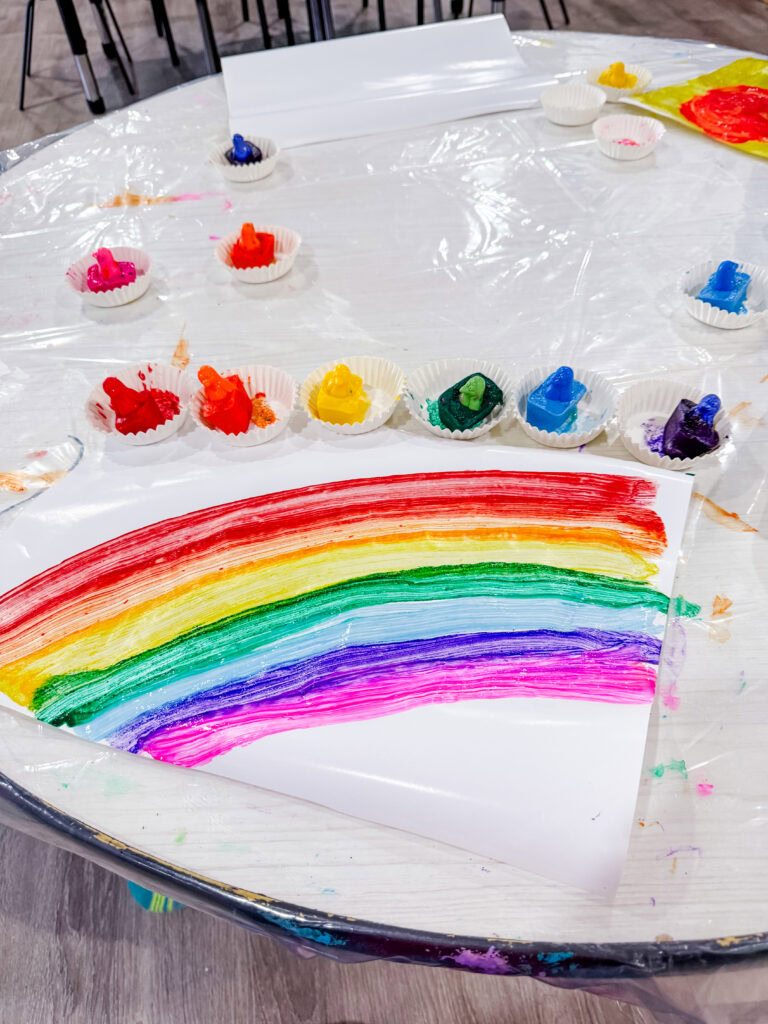
Ice cube painting is an engaging way for preschoolers to explore color and sensory play. This version adds a fun twist by using small plastic penguins as handles, creating a colorful process art activity inspired by Penguins Love Colors by Sarah Aspinall. The frozen paint encourages slow, intentional movement while giving children a new way to experience color and texture.
Connecting the Activity to the Book
Penguins Love Colors tells the story of six penguins who choose bright paint colors to make a surprise for their mama. Each one picks a color that matches its flower name, which helps children hear and repeat the color words. After the story, the ice cube paints give them a chance to explore those same colors in a hands-on way.

Materials needed:
A few basic supplies help create a bright set of frozen paints that are easy for children to hold and use.
Gather the following:
- ice cube tray
- colorful plastic penguins
- bicolor paint
- flour (optional, for opaque paint)
- Sturdy paper
Preparing the Ice Cube Painting Trays
Taking a few minutes to prep the trays ensures that the activity runs smoothly during center time. Begin by filling each ice cube section with a small amount of paint. Freeze the tray for about an hour so the paint becomes slightly firm. Next, press one penguin into each compartment so it becomes the handle once the entire cube freezes.
Freeze the trays overnight. When you’re ready to begin painting, set the trays out for a few minutes so the paint softens slightly. Place each frozen paint cube into a paper cup or small tray to contain drips and keep colors organized for children.
Painting with the Frozen Penguins
Once the ice cube paints are ready, children can explore them in open-ended ways. Encourage them to notice how the paint changes as it melts, and model how to make long strokes, gentle taps, or circular motions. Large sheets of sturdy paper work well because they provide room for wide movements and color mixing.
As each cube softens, the paint glides more easily and creates bold, bright marks on the page. Children often enjoy switching colors, so keeping the paints in the ice cube tray makes it simple for them to move between shades.
Why Ice Cube Painting Works
Ice cube painting supports learning across several developmental areas while keeping the experience fun for preschoolers.
The frozen penguin handles help strengthen fine motor control, especially as the paint begins to melt and children adjust their grip. This activity encourages conversations about color, mixing, temperature, and texture. Because there is no expected final product, it offers success for all learners, including those still gaining confidence with art materials.
- Open-ended process art
- Great for reluctant writers or children who struggle to try new things
- Hands-on experience with color theory
- A great sensory experience

Looking for more Winter Art Projects?
Just click, print, and teach!